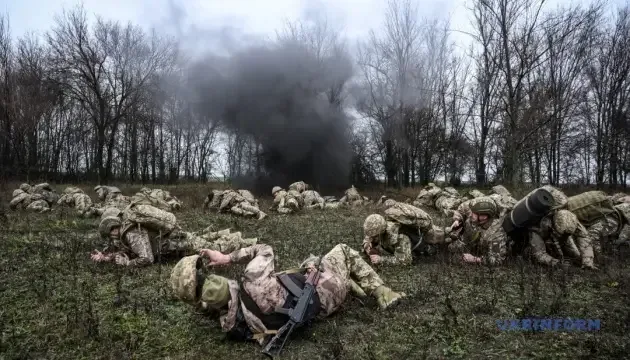

When people hear “FPV drone,” the first image that comes to mind is usually footage from the war in Ukraine—a $500 drone taking out a tank. We've covered that story more than once on this blog. But the battlefield isn't the only place FPV drones are spreading at explosive speed.
Drone Show Korea 2024 (DSK 2024), held at BEXCO in Busan this past February, drew 318 companies from 23 countries across 1,200 booths—the largest drone-focused exhibition in Asia. Defense firms like Korean Air and LIG Nex1 anchored the center of the floor, but a large share of the show belonged to the civilian sector: drone delivery, wildfire suppression, pipe inspection, agricultural spraying, even FPV tactical-training simulators.
By the Korea Transportation Safety Authority's count, the number of registered drones in the country has passed 60,000 and is climbing by roughly 1,500 a month. In surveys, 47.5% of people say they've flown a drone themselves, and 34.1% say they'd like to try if they got the chance. The interest is already there.
That Shot You Saw at the Movies? It Was Filmed with FPV
The civilian field FPV drones have penetrated fastest is video. Where a standard camera drone is used for stable, sweeping aerial landscapes shot from above, an FPV drone produces something entirely different: footage that threads between buildings, descends a staircase, and tucks in tight behind a speeding car. A single unbroken take. Shots like these are physically impossible with a jib or a crane.
Small FPV drones called cinewhoops have ducts around their propellers, so they can fly safely indoors. They can slip through a narrow doorway, travel down a hallway, and weave between people. Real-estate promos, hotel tours, wedding highlight reels. Helicopter shoots vanished from broadcasting long ago, and now, by many accounts, FPV is encroaching on the jib's territory too.
Demand is rising fast in advertising as well. Drop a single FPV shot into a 30-second spot showing off a product, and what the viewer feels changes. The camera drops from the sky, runs down the face of a building, passes through a window, and enters a room. A sequence like that simply doesn't work without FPV.
They're Used on Industrial Sites, Too
It isn't just filming. FPV drones are sent into places people can't easily reach—the underside of a bridge, transmission towers, the inside of a pipe—for inspection work. Ordinary drones fly on GPS, so they can't hold position indoors or inside a structure. An FPV drone is flown manually by a pilot wearing goggles who watches the feed directly, so it can operate even where there's no GPS signal.
At Drone Show Korea, a pipe-inspection drone called “IBIS2” was on display, and a cleaning drone for washing industrial equipment was demonstrated live. Work that once took a person a full day of climbing to inspect, a drone finishes in 30 minutes. Risk and cost fall at the same time.
But FPV Isn't Easy
Here's one thing worth flagging. An FPV drone is fundamentally different from an ordinary camera drone. A drone like the DJI Mavic lifts off on its own when you power it up and stops in place the moment you let go. GPS locks the position, sensors avoid obstacles, and software holds a steady hover.
FPV drones have almost none of these safeguards. Take your hands off the sticks and the aircraft drops. In exchange for being able to pull 360-degree flips, steep dives, and hard turns, the pilot has to control every axis in real time. The usual way in is to practice for dozens of hours on a simulator before moving to a real aircraft.
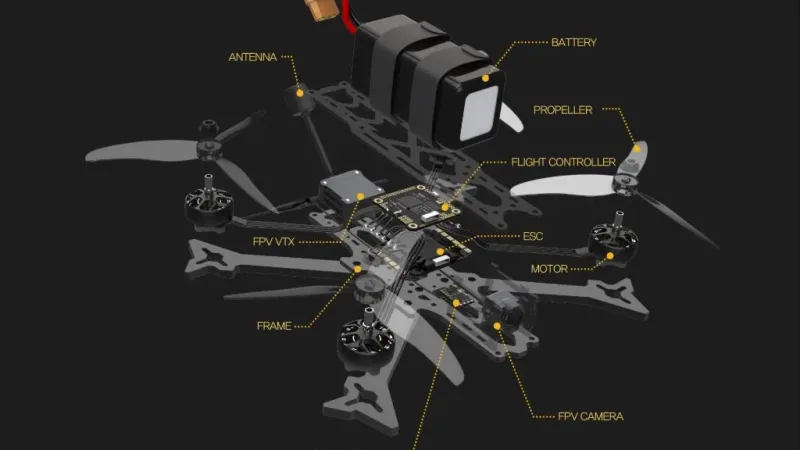
The hardware is different, too. You don't buy a finished product and fly it straight out of the box; you have to understand and assemble the frame, motors, ESCs (electronic speed controllers), the FC (flight controller), the VTX (video transmitter), the camera, and the receiver. Configuring a piece of software called Betaflight, which you install on the flight controller, is essential as well: PID tuning, rate settings, filter adjustments. Skip this and the aircraft won't fly properly—or if it does fly, the footage shakes.
The controller (the transmitter) runs its own firmware. You install open-source software called EdgeTX or OpenTX and handle the channel mapping and switch assignments yourself. Goggles come in analog and digital versions, and which one you choose depends on the receiving frequency and the resolution.
A High Barrier to Entry Means Learning It Properly Sets You Apart
This complexity is both FPV's barrier to entry and its appeal. Anyone can get an ordinary drone in the air in 30 minutes—but the footage everyone gets looks about the same. Because FPV demands piloting skill, hardware knowledge, and software configuration all at once, the work of someone who has truly mastered it stands out.
Video freelancers, industrial-inspection specialists, racing pilots, hobbyist flyers. Demand for people who can really handle FPV is growing, while supply is still short. One survey found that “features” topped the list of priorities when buying a drone at 61.8%—a sign this has become a market that weighs features ahead of price (23.5%).
If your only exposure to FPV drones has been through war coverage, it may feel strange to learn that the technology is also at work in movie theaters, factories, and wedding halls. But the figure climbing by 1,500 a month tells the story. FPV is already moving beyond the battlefield and into everyday life. From motors and frames to Betaflight settings, the people who understand this technology systematically are the ones who will seize the next opportunity.