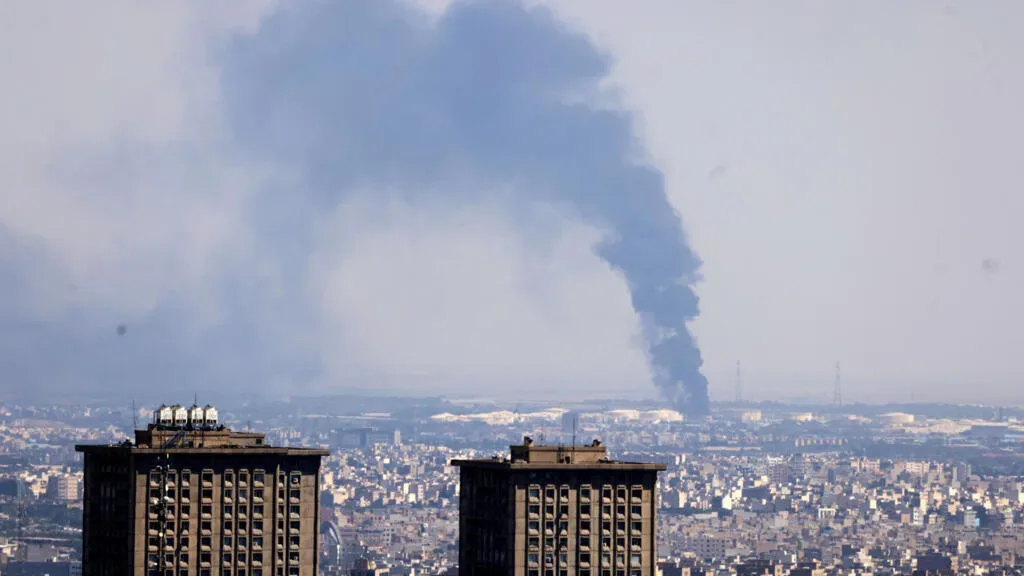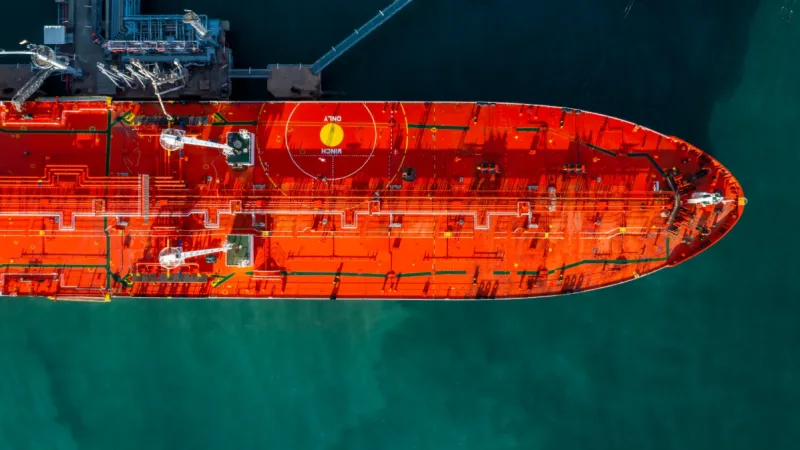

It is just 33 kilometers wide. Yet this single narrow channel governs 20% of the world's oil supply. This is the Strait of Hormuz. On February 28, 2026, after Iran effectively closed the strait, Brent crude shot up to $101 a barrel. Twenty million barrels a day—an energy trade worth roughly 905 trillion won a year—ground to a halt in an instant.
When Korean companies talk about expanding into the Middle East, the thing they are most likely to overlook is exactly this kind of geopolitical risk. Fixate on the dazzling blueprints of the NEOM project or the investment opportunities of Vision 2030, and you lose sight of the structural instability baked into the region itself.
The 33 Kilometers That Move the World Economy
The Strait of Hormuz is not just a shipping lane. Oil from all six Gulf states—Iran, Iraq, Kuwait, Qatar, Saudi Arabia, and the UAE—passes through it. So does 20% of the world's LNG trade and a third of its fertilizer trade.
More important still is that the narrowest point of the strait lies entirely within the territorial waters of Iran and Oman. Under UN rules, a country may claim territorial waters up to 12 nautical miles from its coastline—and the Strait of Hormuz falls completely inside that limit. In other words, Iran can close it whenever it chooses.
During the Iran-Iraq War of the 1980s, a "tanker war" broke out here, prompting the U.S. military to launch escort operations. History repeats itself. To do business in the Middle East is to enter a game premised on this kind of geopolitical volatility.
Indeed, after this latest closure, daily vessel traffic fell by 95%. A waterway that normally sees 3,000 ships pass through carried just 100 between March 1 and March 20. And this result came not from a physical blockade, but from the mere threat of drones and missiles.
The Risk Korean Companies Are Missing
The problem is that Korean companies' Middle East strategies fail to account adequately for this variable. Suppose a firm moves in chasing the investment opportunities of Saudi Vision 2030—how will it respond when a closed Strait of Hormuz paralyzes raw-material supply chains or sends energy costs soaring?
In fact, this episode pushed several Asian countries to encourage remote work to conserve fuel, and universities moved up their breaks. In Africa, authorities imposed power-consumption limits; in Europe, even fuel rationing is being discussed. Companies operating on the ground in the Middle East have no choice but to take an even more direct hit.
It is also worth noting that China buys 90% of Iran's oil, processes it, and exports the products worldwide. Closing the Strait of Hormuz is therefore not simply an energy problem—it is an event that shakes the entire global manufacturing supply chain.
Saudi Arabia's Bypass Strategy, and How Companies Should Respond
Fortunately, the Gulf's oil producers have been preparing for this scenario for a long time. Saudi Arabia operates a 1,200-kilometer east-west pipeline capable of carrying five million barrels a day. The UAE, too, can reroute 1.5 million barrels a day through a pipeline linking its inland oil fields to the port of Fujairah on the Gulf of Oman.
But even this alternative infrastructure has its limits. It costs more than seaborne transport, and its throughput is capped. More important, these bypass routes can themselves become fresh targets the moment geopolitical tensions flare.
What Korean companies must absolutely weigh when planning a Middle East venture is scenario planning for exactly this kind of supply-chain risk. Rather than seeing only the business opportunity, they need backup plans that can keep operations running even in the worst case.
A Strategy That Accepts Geopolitical Reality
The Middle East is a region where opportunity and danger coexist. Mega-projects like NEOM and the investment openings of Vision 2030 are undeniably attractive. But companies also have to accept the reality that a single 33-kilometer-wide chokepoint—the Strait of Hormuz—can dictate the entire business environment.
The point is not to fear this risk blindly, but to build a strategy for managing it realistically. Diversifying supply chains, drawing up contingency plans, structuring insurance, and strengthening local partnerships all help minimize uncertainty.
The closure of the Strait of Hormuz will eventually end, but the Middle East's geopolitical tensions will not. For Korean companies to become true Middle East experts, they must build strategies that account not only for the glittering development plans, but for these darker realities as well.