
A Vicarious Escape Hatch for People Trapped by Safety
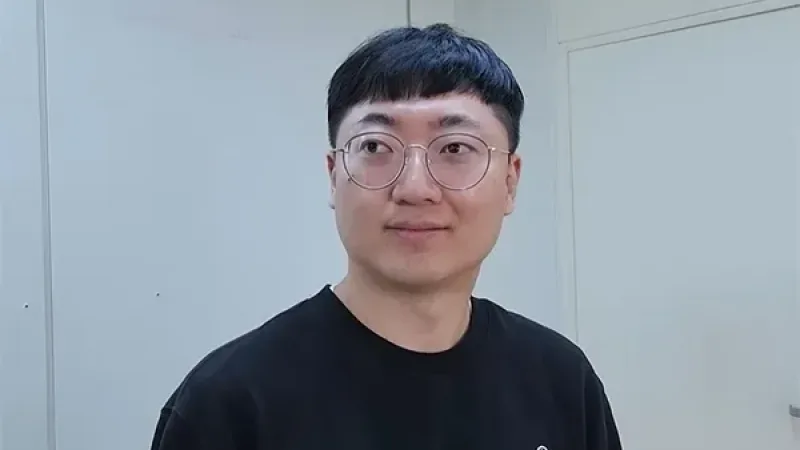
Kim Seon-tae, a civil servant, gathered 730,000 subscribers within 48 hours of opening his YouTube channel. When you consider that the entire city of Chungju has a population of 210,000, that figure is nothing short of staggering. But what struck me even more was a single line he dropped in his very first video.
"The biggest reason I'm quitting is that I want to make more money."
This is an era in which that kind of bluntness becomes a weapon. And yet, when I look a little closer, I wonder whether what we're really doing is living vicariously through his candor.
The key phrase for understanding the Kim Seon-tae phenomenon, I think, is "vicarious escape hatch." The fervor with which people cheer his decision to kick down the fence of a stable government job paradoxically lays bare the safety addiction running through our society.
In fact, among job seekers in their twenties and thirties, the share who prefer civil service rose from 71.2 percent in 2023 to 76.8 percent in 2024. There's nothing wrong with seeking security, of course. But I can't help wondering whether, in fixating on safety, we've lost sight of the essential question—"What is it that I actually want?"
I don't think the surge in Kim's subscriber count is mere curiosity. I read it as a response welling up from an inner question: "He pulled it off—so why can't I?" In that sense, his channel has become more than a personal brand. It's a screen onto which we project our collective desire.
Personal Branding as a New Kind of Safety Net
Here's where it gets interesting. Kim may appear to have made an "unstable" choice, but the truth is that he already had plenty of safety nets in place. There was the recognition and content-production experience he'd built up on ChungTV, the city of Chungju's official channel—and, above all, the 'Chungju Man' brand that was uniquely his.
Personal branding is no longer the exclusive domain of influencers. We've entered an age in which ordinary office workers, and even civil servants, can cultivate a flavor all their own. Kim never lost his personal color even within the constraints of public service. And in the end, that color became the sturdy launchpad for his independence.
Look closely at his formula for success and it's clear. He patiently grew a personal brand inside the organization, then used it as a springboard to a bigger stage. It's also a new safety strategy—one that competes on the value of the individual rather than leaning on the organization alone.
An Era When Honesty Becomes Content
The part of Kim's first video that resonated with me most was his confession that he "wanted to make more money." Not some dressed-up reason about serving the public good or chasing a dream, but the most honest and practical motive, laid bare exactly as it was.
Why does that kind of honesty land? Probably, I'd suggest, because people no longer believe perfectly packaged stories. If anything, they feel greater trust in raw, unvarnished sincerity. The candor Kim showed wasn't a strategy—it became, in itself, a piece of powerful content.
This points to a new direction in personal branding. Rather than performing perfection, showing authenticity; rather than hiding your weaknesses, owning them honestly—that, his example vividly demonstrates, is what builds a more powerful personal brand.
A New Balance Between Safety and Risk
The real message of the Kim Seon-tae phenomenon isn't "abandon safety and take the leap." It's the realization that "even within safety, you can carve out a domain entirely your own." He did, after all, steadily build a personal brand through the ChungTV platform while still employed as a civil servant. And that brand later became a precious asset for his independence.
Naturally, the Kim Seon-tae version of success can't be transplanted onto everyone exactly as is. But the principle we can draw from his case seems clear enough: build your own value, step by step, right where you stand—and keep stacking that value, patiently and consistently.
The number 730,000 subscribers is not just a statistic. It's the evidence and the payoff of the trust Kim accumulated, one piece at a time. So what is the real reason we cheer him on so fervently? Perhaps it's because he has placed before us the most fundamental question of all: "Am I really living the life I want right now?"