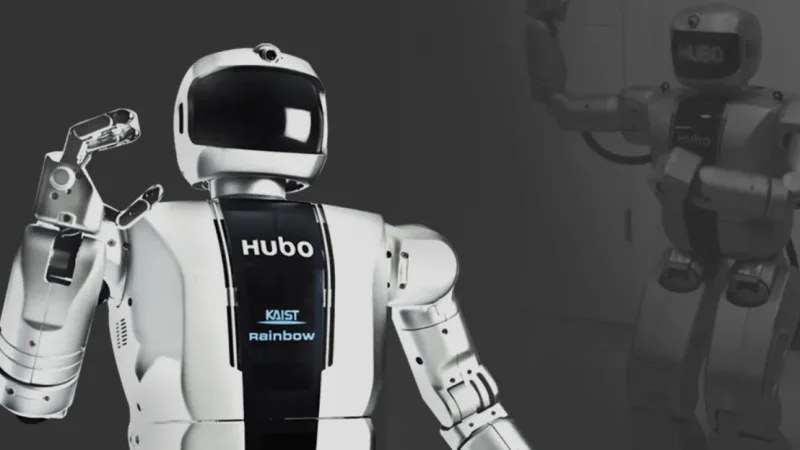

Samsung Electronics has announced that it will convert all of its production lines worldwide into AI-driven autonomous factories by 2030. What's worth noting is that this isn't simple automation—it's the large-scale deployment of humanoid robots. The plan calls for robots to handle every domain: operating bots to manage production lines, logistics bots to move materials, and assembly bots to handle the assembly process.
But why is Samsung pouring resources into robots right now? Because the paradigm of AI investment is undergoing a fundamental shift.
The Stages of AI Investment
AI investment can be broadly divided into three stages. The first is the "brain" stage. Generative AI like ChatGPT, Claude, and Gemini falls into this category. These systems understand language, generate text, and even reason.
The second is the "senses" stage—the point at which AI gains the ability to see, hear, and feel. Computer vision, speech recognition, and sensor fusion are the core technologies here. Self-driving cars are the textbook example.
The third is the "physical embodiment" stage—the point at which AI acts in the real world. Humanoid robots, industrial robots, and drones all belong here.
The Three Stages of AI Investment
Why Physical AI, and Why Now
Samsung's timing is impeccable. The software AI market is already approaching saturation. OpenAI, Google, Microsoft, and Anthropic are locked in fierce competition, and the limits of performance gains are starting to show.
Physical AI, by contrast, is only just getting started. It requires combining hardware and software, operating in real-world environments, and guaranteeing safety on top of all that. The barriers to entry are high—but so are the first-mover advantages.
This is precisely why Samsung is teaming up with Rainbow Robotics. The strategy is to accumulate physical AI data on the factory floor first, then expand into B2B and B2C. In an AI era where data is competitiveness itself, the company that secures real-world operational data first is the one that wins.
The Signal Investors Should Watch
This shift carries important implications from an investment standpoint. First, the center of gravity in AI investment is moving from software to hardware. Second, companies that apply AI to real industries are more likely to create greater value than those that merely develop AI technology.
Samsung Electronics' stock has pulled back recently, but viewed over the long term, this humanoid strategy could become a new engine of growth. If it spreads across manufacturing as a whole, the company could seize the initiative in the global robotics market.
Related players like Rainbow Robotics are drawing attention as well. When investing in robotics ETFs, however, you should look closely at actual revenue models and market-entry plans rather than simply chasing the "robotics" theme.
AI has now moved beyond the stage of thinking and into the stage of acting. It's time for investors to prepare alongside it.