
A Trust Revolution Built on Battlefield Data
The Middle East defense market used to run on brand names and lobbying. Buyers paid a premium for American and German weapons while treating cheaper Russian hardware with suspicion, regardless of actual performance. But battlefield results from 2025 have upended that logic, replacing reputation with hard data.
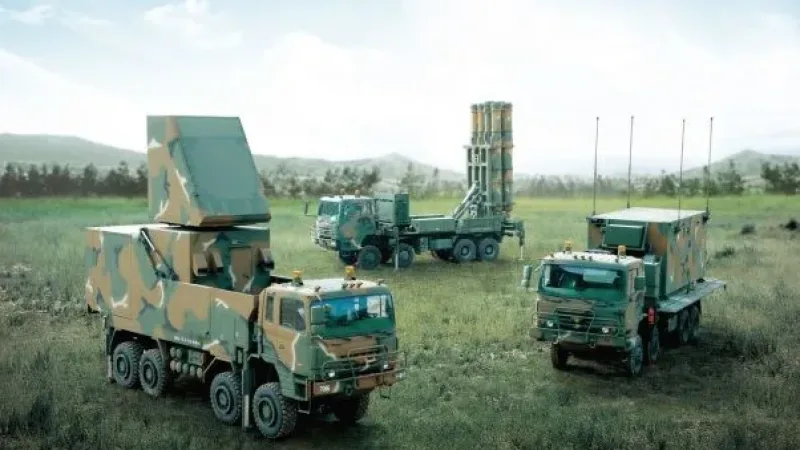
The Cheongung II's proven success intercepting missiles in real combat gave Gulf states something concrete to point to. Saudi defense officials weren't just impressed by the interception rate — they noticed Korea's supply reliability. While the United States and Israel struggled to keep up deliveries amid "America First" and domestic-priority policies, Korea hit every promised deadline.
The conversation has since moved past price competitiveness and into reliability. When a weapons purchase is tied to national survival, proven performance carries more weight than any discount.
K-Defense's Localization Strategy Meets Vision 2030
Crown Prince Mohammed bin Salman's Vision 2030 is a national push to diversify the Saudi economy away from oil dependence, and defense manufacturing sits at its core. Saudi Arabia isn't just shopping for weapons — it wants to build up its own defense industry.
Hanwha Aerospace has read that intention correctly. Its ongoing talks with the Saudi Arabian National Guard over local production and MRO (maintenance, repair, and overhaul) infrastructure are proof of that. In a ground-equipment modernization program estimated at ₩10 trillion (roughly $7 billion), Korea is positioning itself not as a mere supplier but as a technology-transfer partner.
Understanding Saudi Arabia's power structure matters here too. Crown Prince bin Salman is steering the kingdom away from its traditional reliance on the West and toward diversified partnerships. With China's Norinco facing political-risk constraints on its bids, Korea stands out as the rare partner that can offer independent technological capability while still operating within the US alliance system.
The Technology Behind K-Defense's Global Appeal
What sets Korean defense manufacturing apart shows up in integrated systems. The automated link between the K9 self-propelled howitzer and the K10 ammunition resupply vehicle delivers resupply speeds ten times faster than competing systems. That's not just a technical flex — it sharply cuts the time crews are exposed to enemy counter-battery fire, directly boosting survivability on the battlefield.
That's also why Hanwha's K9MH is a leading contender in the US Army's SPH-M program. In a planned procurement of 600 units, the combination of strong performance and a 30-40% lower acquisition cost gives Korea a clear edge over rival bidders.
Just as important is supply chain resilience. Korea is stepping in to solve the propellant charge shortage that worsened after the Russia-Ukraine war, thanks to Hanwha Aerospace's vertically integrated value chain spanning raw material sourcing, chemical processing, and mass production.
Korea at the Center of a New Security Alliance
Once the Boeun Smart Plant comes online in 2026 and a US-based propellant charge factory begins operations in 2029, the two facilities are expected to generate roughly ₩1.5 trillion in annual revenue. That marks Korea's shift from exporting finished weapons systems to controlling a critical link in the consumables supply chain.
The ramp-up of Korea's local production base in Australia is a symbolic milestone, signaling that Korean defense manufacturing has become a core player in developed-market supply chains — recognized as an essential industrial partner within the Anglo-American security alliance.
Korea has moved beyond simply selling weapons to becoming a trusted partner shaping the long-term sustainability of the global security landscape. Seventy years of accumulated capability in Korean defense manufacturing is now meeting a moment of geopolitical upheaval — and the growth has been explosive.
Saudi Arabia's ₩10 trillion proposal is only the beginning. Armed with reliability that goes beyond cost-effectiveness, K-defense is setting a new global standard for security partnerships.