
When people ask what I do for a living, I tell them I work in publishing. The predictable follow-up is always, "Isn't publishing tough?" Everything they might say next is usually true, but before I answer, I weigh how close I am to the person — whether the relationship calls for a real answer or just a nod of agreement.
The outside world's statistical view of the industry often resonates with me — there's real truth in it. But is there any industry that isn't hard? Complaints about a downturn, or about one's own job, would surely come out of somebody's mouth even in the middle of a boom. What strikes me as premature, though, is judging an industry before asking whether you're actually a fit for it.
Being a generalist turned out to suit publishing
I believe publishing genuinely suits me — not because I love reading, and not because I love books as objects. It's because I'm the kind of person who'd rather sample many fields than dig deep into just one. I get real satisfaction from exploring different subjects, learning them firsthand, and meeting the experts and creators behind them. Editing manuscripts from people working on the front lines of their industries, watching those industries up close, and trying to forecast where they're headed — all of it expands and cross-pollinates my own knowledge, and there's a real pleasure in feeling myself become a more well-rounded person through that process.
Aquascape Class started from a simple curiosity: wouldn't everyone living in a bleak urban landscape want a garden-in-a-fish-tank at home? FPV Racing Drone Bible began in December 2016, when I discovered a world beyond toy drones and met the author in person for the first time at Gwangnaru Airfield on the Han River. Reaching out to the author, building up the relevant knowledge, shaping it into a book, and then promoting it — I learned a great deal at every stage of that process. And each of these authors has since built an uncontested position in their own field.
What I learned from trying woodworking
Outside of bookmaking, I've personally studied ceramics for a year and woodworking for six months. But in both crafts — the kind that demand physical stamina and hands-on skill, where you have to pour your time fully into making one thing — I felt a strange unease, and eventually gave them up.
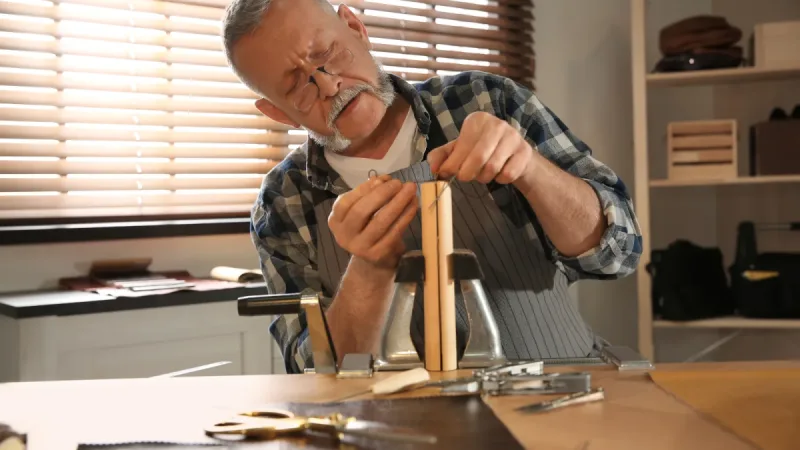
Woodworking was a clear example. Two months of three-hour classes, once a week, produced exactly one wooden mallet. In tuition, that came out to roughly 1 million won (around $750) for a single mallet. Sure, you could call that the cost of learning a skill — but I realized I was more interested in efficient, machine-based production than in carving something out piece by piece, by hand. That's when I understood something about myself: I value productivity and efficiency, and I can't feel satisfied when the output is small relative to the time and effort put in.
I care more about what happens after the book than the book itself
That same tendency shapes how I approach publishing. I don't think of making a single book as an act of artistic creation in itself. What matters more to me is seeing how that book changes a reader's life.
So when I meet an author, we don't just talk about structure and concept — we plan out what happens after publication, too. I tell them I'll supply as many complimentary copies as they need, so please, go get famous. My thinking is that publishing's real job isn't to let famous people write books, but to make people famous through their books. If there's no joy left in watching an author's life change after publication, in watching readers meet that author, in watching a community form and move around a piece of knowledge — then publishing, to me, loses its meaning entirely.
Because of that, I inevitably grow distant from authors whose outlook doesn't match this one. Our criteria for continuing to support an author are clear: do they share our vision and keep working, relentlessly, to build activity around the book? Does the book serve as an axis for expanding relationships through that knowledge, or does it end up as nothing more than a personal keepsake marking one moment in their life? That's the distinction we try to make.
I want to make tools, not art objects
I'm sure some people will disagree with this view. There are absolutely fields that call for real craftsmanship, and I understand the value of making things one at a time, by hand. I also understand that certain corners of publishing — literary fiction, for instance — run on the exact opposite philosophy from mine.
But when something has only aesthetic value and no practical use, that's the territory of fine art. What I want to make isn't a work of art for the few — it's something many people can put to use. That's why I want every book Libretto publishes to become a tool that changes people's lives. Watching that transformation happen, and learning from it firsthand, is the reason I'm in publishing — and it's the direction Libretto is trying to head. So to anyone who dreams of publishing a book, my advice is this: think first about what comes after the book, not the book itself. A keepsake gives you a single moment of pleasure and nothing more. But an experience that expands your relationships is an investment — one that keeps opening up new opportunities.