
Vibe coding has arrived, and now anyone can build an app in a day. AI writes the code, helps with the prose, and even drafts analysis reports. Our capacity to build has exploded.
There's no point building 100 more units when half of them already sit vacant.
Publishing is no different. With AI assisting the writing, books can now be produced at astonishing speed—giving rise to the almost absurd phenomenon of "vibe publishing." But in the rush to mass-produce, one question keeps getting skipped: who is any of this actually for?
That question sits at the exact core of what a product managerProduct Manager does.
What a PM Actually Does
A product manager owns the entire arc of a product—strategy, planning, development, launch, and growth. They're often called the "CEO of the product," and that description is more accurate than it sounds.
Concretely, this means setting the product's long-term direction and mapping out a roadmap of milestones. It means defining features, prioritizing them, and writing user stories that become a clear specPRD, Product Requirements Document for the engineering team. It means analyzing user feedback, market trends, and product data to find where to improve. And it means aligning engineers, designers, and marketers, and driving the decisions that come out of those conversations.
There are three axes a PM carries around at all times: can users actually use itUsability, can it be builtFeasibility, and does it make business senseViability. Weighing these three against each other, constantly, is simply what the job is.
The PM's three core judgment criteria
It's easy to confuse this role with adjacent ones, so here's a quick breakdown: the PM focuses on product strategy and vision. A Product Owner, in an agile org, owns backlog priority and delivery outcomes. A service planner (a role common in Korean tech orgs) focuses on feature implementation and user-flow design. A project manager handles schedule, cost, and risk.
But AI Now Does a Large Share of the PM's Job
And that's where the trouble starts.
Data analysis? AI does it faster and more accurately. Market research? A competitor analysis report can be ready in minutes. A first draft of a PRD? One prompt produces something perfectly plausible. AI can help write user stories, too, and design A/B tests.
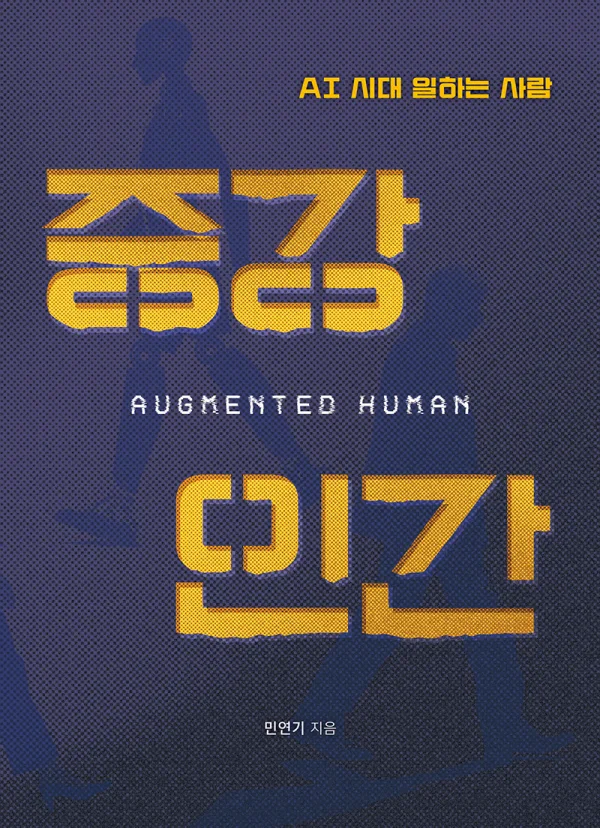
Using the framework from author Min Yeon-gi's book The Augmented Human, this is the same story as the shift from Work 1.0 to Work 3.0. We moved from an era when skilled labor was the whole of one's capability (Work 1.0), to an era of knowledge workers extracting information from data (Work 2.0), and now we've entered an era where AI can substitute for both skill and knowledge (Work 3.0). Of the three axes of human capability—skillSkill, knowledgeKnowledge, and attitudeAttitude—two are now being replaced.
The three axes of human capability
PMs are no exception. The very abilities that once defined a strong PM—data analysis, technical fluency, UX design—can now be handled, to a significant degree, by AI.
So What's Left for the PM?
The Augmented Human opens with the story of Snow White's magic mirror. When the stepmother asks, "Who is the fairest in the land?" the mirror answers. But the mirror has never once stopped to consider what "fair" actually means. It simply produces an answer built on the biases baked into past data. Even for questions with no right answer, the mirror always answers—right or wrong—and when the stepmother didn't get the answer she wanted, she smashed it.
A PM's situation isn't so different. Ask AI, "Should we build this feature?" and you'll get a plausible, data-backed answer. Ask, "What strategy are our competitors using?" and you'll get a tidy analysis. But AI cannot ask itself the question, "Why should this product exist at all?"
We see the same thing every day in publishing. No matter how fast AI can generate content, choosing a subject, defining the reader, and shaping the direction of a book still has to be done by a person. A book isn't a stack of printed paper summarizing an author's knowledge—it's something that enters a reader's life and fills their mind. Someone still has to decide what goes into that building, and what change it's meant to create.
The same is true of products. What's left for the PM ultimately comes down to three things.
First, the disposition to judge value. Deciding whether what AI has produced is genuinely meaningful to users, and why this product should exist in the market at all—that's still a human call. Weighing usability, feasibility, and viability against each other remains a person's job, especially when the three pull in different directions—when users want something that's technically hard and commercially uncertain. Deciding where to put the weight isn't something AI can do.
Second, the disposition to keep learning. Markets never stop shifting. Yesterday's data offers no guarantee it still holds for today's decisions. AI is bound to past data, but a person can sense signals of change before they've ever become data at all. That's why a PM still needs to see the field firsthand, meet users directly, and read the mood of the market.
Third, the disposition to connect and expand. A PM is the person aligning engineers, designers, and marketers. That's not just a communication skill—it's the work of linking different viewpoints and pulling them toward one shared direction for the product. Someone oriented toward connecting beyond existing boundaries: that's exactly how author Min Yeon-gi defines the augmented human.
A PM Is Not Someone Who's Good at Using AI
Here's where it's easy to get the wrong idea.
"So the PM who's best at using AI is the one who survives?"
No. As Min Yeon-gi points out precisely, an augmented human isn't someone who's simply skilled at wielding AI. It's someone who judges whether what AI produces is good enough, never stops learning, and stays oriented toward connecting beyond the existing frame.
For a PM, that looks like this: not taking an AI-drafted PRD at face value, but figuring out what context is missing from it. Reading the story the numbers don't tell in AI-analyzed data. Standing in front of a list of AI-suggested features and being able to ask, "Why do we need to build this at all?"
This is an era where building a real connection with the reader matters more, and is harder, than simply writing and filling more pages. Products are the same. Designing something that actually enters a user's life matters more, and is harder, than simply cranking out more features.
What Will You Ask AI?
In the era of Work 3.0, the PM role won't disappear. If anything, it will matter more. But what the job actually consists of will change fundamentally—from a PM who analyzes data and writes documents, to a PM who judges direction and designs value.
The question The Augmented Human ultimately poses comes down to this.
What will you ask AI?
And when AI hands you its answer, what will you judge for yourself?
The PM who has their own answer to that question is the augmented human of this era.