One venture capitalist put it bluntly: "I made the call in three hours. I beat every other bidder to it, and it took seven years to find out whether I'd been right." For a long time, that seven-year stretch of not knowing was simply accepted as the cost of doing business in Korea's VC industry. Speed passed for conviction, and moving fast became its own proof of competitive edge. On July 1, 2026, the law stepped in and put a stop to that.
The amended Act on Venture Investment took effect on July 1, 2026. It reads like a handful of clause changes, but it marks a structural break from the "speed-first" habits that have driven Korea's venture investment market for the past two decades or so. The shift lands directly on how VC firms operate — and indirectly on the strategy of founders and solo product managers trying to raise money.
When Deploying Fast Was the Law
The old venture capital company law was built around a deployment mandate: firms had to invest a set share of a fund within a fixed window after it closed. For a VC firm, investing slowly meant breaking the law, so deployment speed itself doubled as a performance metric. Naturally, an "invest first, ask questions later" culture took hold. Even when a manager wanted more time to watch a team work, a looming deadline routinely pushed speed ahead of judgment. It was a system where the manager racing to hit a deployment deadline moved faster than the one who actually wanted to study the team longer.
The amendment overhauls that structure. In place of the speed-driven deployment mandate, it raises the bar on post-investment portfolio management and accountability. How a firm engages with a company after writing the check, and what results that engagement produces, now enters the evaluation. Disclosure and transparency requirements toward LPs (limited partners — the investors who fund the VC firm) also tighten. Requirements around a venture capital firm's assets under management and professional staffing get adjusted too. The likely outcome is consolidation: the small, undifferentiated firms that have proliferated in recent years either meet the new bar or get squeezed out of the market.
Read as a single thesis, the amendment points the market in one direction: away from how fast a firm invested, and toward how it managed that investment and what it actually built.
What Fast Decisions Left Behind
The costs of that speed-first culture surfaced in more than one place. There were startups that raised hundreds of millions of won within three to six months of founding, then quietly shut down inside two years. There were founders who closed a round but never got meaningful advice or network access out of their VC. There were sectors that ended up oversupplied because duplicate money chased the same idea from multiple directions. The internal pressure to deploy quickly left firms with too little room to ask whether the investment was actually worth making.
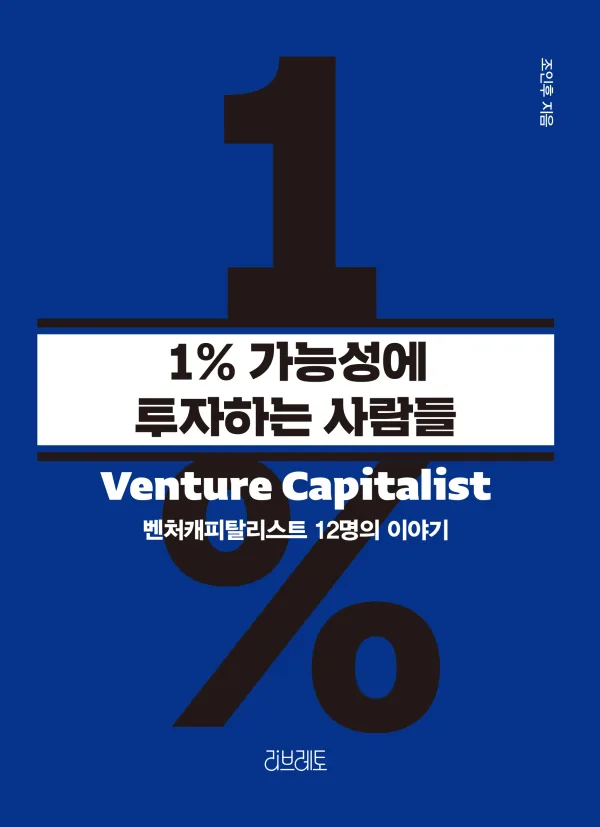
In a book where twelve venture capitalists candidly recount their own investment experience, one scene keeps recurring. A good investment decision was never made off a single pitch. The pattern that repeats is watching a founder for a long stretch, reading where the industry is heading, and weighing what role the firm could actually play after the check clears — only then does a serious call become possible. Investors who already worked this way existed before the amendment. What the law does is try to make that discipline the market-wide standard.
Still, plenty of critics push back. Korea's startup ecosystem is still in a growth phase. In early-stage investing — where a bet has to be placed on an idea and a team rather than on proven traction — heavier operating accountability could make firms more gun-shy about taking bold swings, the argument goes. Others point out that emphasizing short-term performance metrics could shrink early investment in fields like deep tech and biotech, where the payoff horizon routinely runs past ten years. And with foreign VCs entering the domestic early-stage market with faster decision-making, adding more process for local firms could put them at a real disadvantage on agility. A system built to slow things down can, at times, slow down bets that actually needed to happen.
The Signal Founders and Solo PMs Should Read
For founders preparing to raise money, this shift carries a few concrete implications.
The way conversations with VCs unfold may change first. In the past, urgency — "we need to close this round now" — could nudge an investor's decision along. Because firms faced internal pressure to deploy quickly, founders could lean on the logic that they needed to be picked before a rival was. Once that pressure eases, the same leverage stops working as well. A convincing execution plan starts to matter more than a tactic designed to rush the room.
Pitch decks need a different center of gravity too. Rather than leading with "this market is huge," the more effective pitch spells out which milestones will be hit, how, and what concrete outcomes the VC can expect after the check clears. In a system where VCs are graded on post-investment performance, the teams that can show exactly what they'll build together stay in the conversation longest.
The criteria for choosing a VC shift as well. As LP disclosure requirements tighten, each firm's portfolio track record and investment history become more visible. There's simply more information available on which VC actually delivered support after the check, and in which sectors it produced results. That makes it possible to weigh depth of partnership over sheer check size. It's investors who put weight on post-investment performance who ended up with the more consistent long-term track records. That's reason enough to build a different set of criteria for picking one.
For solo operators with no direct stake in VC money, this change will land more indirectly. But when the VC ecosystem gets healthier overall, the partners, freelance directors, and contractors adjacent to it get sturdier counterparts too. If startups get funded after more thorough diligence and receive more careful support afterward, the people working with those companies can expect steadier relationships as well.
In a market where VCs are judged on operating performance, a founder's execution plan starts to matter less for the first meeting and more for how the three years after the check get spent. Checking how far that plan is actually developed right now is the first move founders can make in response to this shift.
As of July 1, the VC clock runs differently. The founders who set their pace to it are the ones who get to stay in the conversation longest.