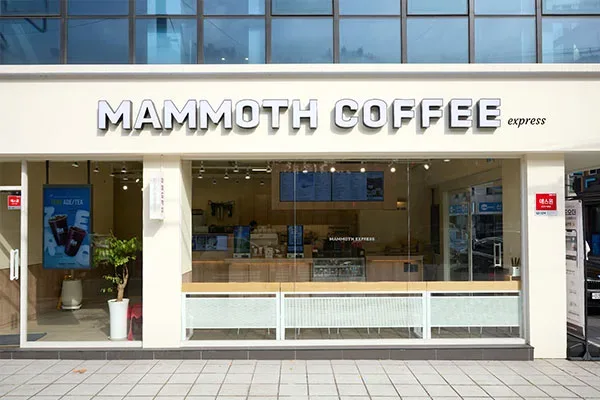
Over the past few years, large coffee franchises built around rock-bottom prices have pushed rapidly into neighborhood commercial strips, and big capital has only sped up the shakeout by snapping up one discount brand after another. Caught in that squeeze, independent café owners run into a hard truth: they simply can't survive by matching the same price tags. This piece lays out how independent coffee shops can survive the low-price wars — not by racing prices down, but by designing value on top of a clear-eyed understanding of cost. If you're wondering whether you should go head-to-head with a franchise on price, it's worth first understanding why that fight was never winnable to begin with.
Why the Fight Should Be About Value, Not Price
Price isn't a fixed number printed on a menu. What actually matters is the relative sense customers have of what they got in exchange for what they paid — that's the real price. If a franchise sells a cup of coffee at a rock-bottom number and an independent café tries to match that same number, it's volunteering for a fight it will lose on cost structure and economies of scale alone. Instead, owners need to first take stock of the things that make customers feel a price is worth paying even if it's the same or slightly higher — roomier seating, better beans, more attentive service, the feel of the space itself. The starting point for surviving as a low-price-era independent café isn't cutting your prices further; it's asking whether the price you're already charging looks justified in the customer's eyes.
You Can't Set the Right Price Until You Know Your True Costs
No matter how well you design perceived value, you can't price correctly if you don't know your costs. The real cost per cup only becomes visible once you factor in not just ingredients — beans, milk, other inputs — but also the fixed costs that get allocated to each drink: rent, labor, utilities. Once you know your cost, you can see your price; once you know your price, you can see your profit. A business that actually makes money starts by not skipping this order. Many independent café owners instead set prices by glancing at the shop next door — chasing a number that has nothing to do with their own cost structure, a habit that tends to quietly eat into margins.
Pair a Pricing Blueprint with the Discipline to Manage Costs Daily
Building a pricing structure strategically is like drawing up a blueprint. A signature drink serves as the flagship item that stamps your value into customers' minds, fast-turnover items keep cash flow steady, and high-margin items carry the profit load — each assigned its own role. But a blueprint alone doesn't run a shop. What turns that design into reality is the daily discipline of cost management: tracking ingredient waste rates, adjusting order quantities to match actual sales, and lining up substitute options ahead of time for ingredients whose costs swing by season. Only with that groundwork does a well-designed price structure actually translate into profit.
From Cost to Profit, in Three Steps
Accurately understanding your costs, designing a price on that basis, actually delivering the value customers should feel for that price, and finally capturing the resulting profit — these steps form a chain where skipping the order, or letting any one link fail, shakes the whole structure.
A Checklist to Run Through Right Now
Before trying to match a low-price franchise number for number, work through the following in order: Have you calculated your true cost per cup by adding ingredient costs and fixed costs together? What perceived value are you layering on top of that cost to justify your current price? Is each item on your menu assigned a clear role — flagship, fast-turnover, or profit-driver? Do you have a routine for regularly checking waste rates and order quantities? Go through these one at a time, and it becomes clear on its own whether your shop is caught up in a price war or standing on value instead.