
Why Private Equity Fell in Love With Coffee
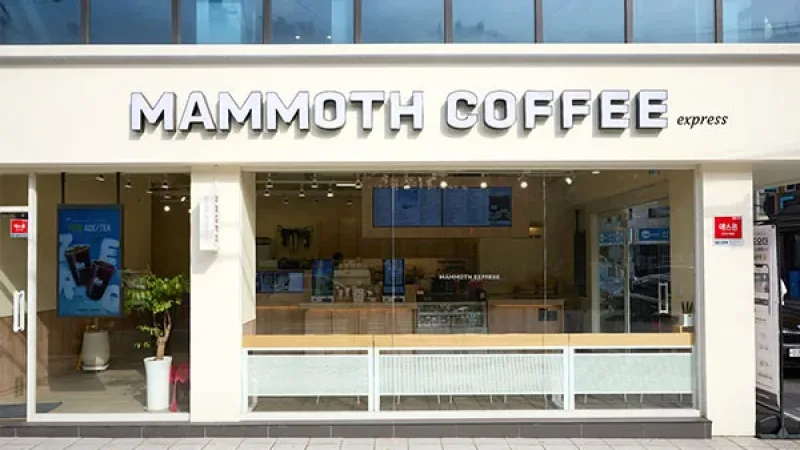
Mega Coffee, Compose Coffee, and Mammoth Coffee sitting side by side on the same block — it's a scene you can now find almost anywhere in Seoul. But these coffee chains share something else in common: every one of them has been acquired by a private equity firm.
By January 2025, most of Korea's low-cost coffee franchises had landed in private equity hands. Mega Coffee was acquired back in 2021 by Premier Partners, a firm under KKR, and Compose Coffee and Mammoth Coffee have both taken on PE capital more recently. From the outside, it looks like a glittering growth story. For the franchisees actually running the stores, the picture looks very different.
Private equity firms buy companies with private capital, aiming to boost their value quickly and flip them for a profit. Low-cost coffee is an easy sell for that model: franchisees shoulder the startup costs, and headquarters' revenue climbs automatically with every new store that opens.
The numbers bear this out. Three years after its private equity acquisition, Mega Coffee's revenue jumped 5.6-fold, from 87.9 billion won to 496 billion won, while operating profit grew 2.5-fold. Premier Partners doubled its investment. That success story is exactly what has drawn other PE firms into the low-cost coffee market.
More Stores, More Success? Not for the Owners
The fastest way for a private equity firm to drive up a company's valuation is simple: open more stores. The fund doesn't bear the startup costs — it just collects franchise fees and distribution margins. Mega Coffee announced an aggressive expansion push right after its acquisition, and other chains followed the same script.
The catch is that more stores means fiercer competition between existing franchisees. One telling metric is the rate of ownership transfers — franchisees selling off their stores. For Mega Coffee, that rate jumped from single digits to double digits right after the private equity acquisition, and it has kept climbing since. There was no brand scandal, no obvious trigger — just more owners deciding they couldn't make it work.
Profits to Shareholders, Burdens to Franchisees
Private equity's priority isn't the franchisee — it's the investor. In its first year under private equity ownership, Mega Coffee paid out 100% of net income as dividends. Within three years, the fund had recouped nearly the full cost of its acquisition. Today, Mega Coffee's dividend payout ratio still sits at 46%, well above the roughly 26% average for listed Korean companies.
Franchisees, meanwhile, have watched their costs climb as marketing spending ramps up to build brand recognition. Campaigns featuring global stars like Son Heung-min were arguably out of scale for a chain Mega Coffee's size at the time — and franchisees were the ones left covering the bill.
The Structural Trap of Low-Cost Coffee
Low-cost coffee is built on thin margins and high volume by design. A single cup of coffee rarely turns a real profit, which is why chains have pushed into desserts and snacks to find another revenue stream. But even that shift burdens franchisees — brewing coffee while also preparing more complicated food items drives up labor costs.
From Mega Coffee's frozen "curbing-so" desserts to yogurt ice cream to its recent instant-ramen snack, the constant stream of new products exists because they carry fatter margins than coffee itself. For franchisees, though, each new item just adds another layer of operational complexity.
How Should Independent Owners Respond?
Surviving as an independent operator in a low-cost coffee market now dominated by private equity capital requires a fundamentally different approach. "I'm just going to open a coffee shop" isn't a strategy anymore.
Start With a Clear-Eyed Self-Assessment
The first step is being honest about whether you're actually cut out to run a business. Opening a café because you love coffee or enjoy the atmosphere is a recipe for failure. Ask yourself first whether you can handle the same grinding routine every day, and whether you have the mental resilience to weather unpredictable income.
In a market now driven by large-scale capital, cold calculation matters far more than sentiment. With even 1 million won a month in net profit proving elusive for many owners, you need a clear, realistic definition of what "success" actually looks like before you start.
Go Independent Instead of Franchising
In a franchise market controlled by private equity, individual owners are structurally the weaker party. They're at the mercy of headquarters' marketing strategy, menu changes, and fee policies.
A more realistic path is differentiating as an independent café instead. That opens the door to menus tailored to the neighborhood, real relationships with regular customers, and flexible operations. Brand recognition may be lower, but a loyal customer base can actually provide more stability in the long run.
Sell the Space, Not Just the Coffee
Escaping the low-cost coffee price war means offering value beyond the drink itself — selling an experience of space, not just a beverage. The goal is giving people a reason to come in that has nothing to do with coffee: a good place to work, a spot to meet friends, a cultural hangout.
Chains backed by private equity are, by necessity, optimized for efficiency — which tends to produce cookie-cutter stores. That's exactly the gap independent owners can exploit to stand out.
Practical Advice for Staying in the Game
Behind every glossy growth story lies a harder reality for the franchisees on the ground. Private equity's goal is a fast exit, and franchisee interests will always take a back seat in that process.
What matters most for an independent owner is simple: staying open. Building a business model that's still standing in three or five years is worth more than chasing any private equity fund's short-term playbook.
Running a café was never going to be easy. With large-scale capital now reshaping the market, independent owners need to be more careful than ever — this is a moment that calls for cold calculation and real differentiation, not sentiment.