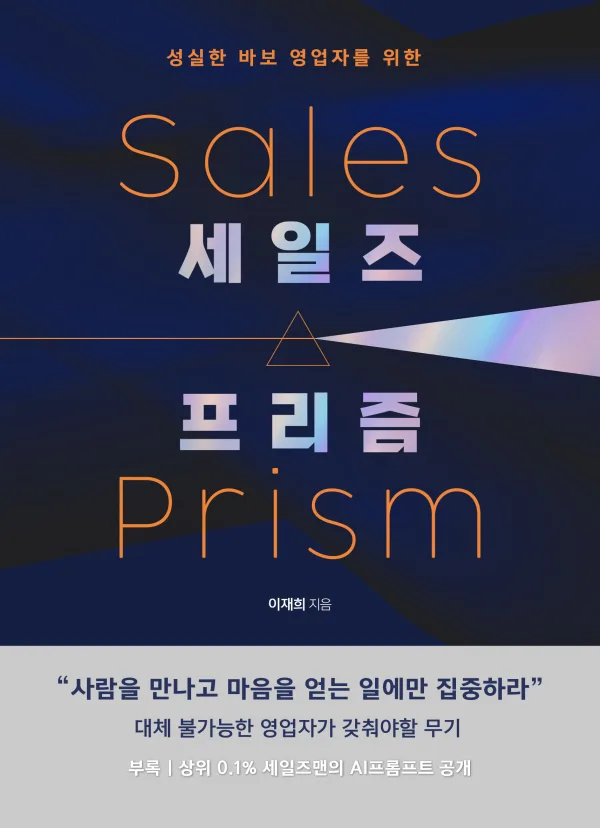

How AI Is Rewiring Sales
Gartner projects that by the end of 2026, 40% of enterprise apps will ship with an embedded AI agent. The AI sales market, meanwhile, is forecast to balloon from $8.8 billion in 2025 to $63.5 billion by 2032.
Daesang Group, a major Korean food conglomerate, rolled AI out across its entire B2B sales operation. The company says it cut the time spent analyzing client accounts by 82% and saved 5,400 working hours a year. LINE Plus, the operator of the LINE messenger, went a step further, building a dedicated "Sales AI Agent" that runs one-on-one, tailored outreach to small business owners around the clock.
Look at the numbers alone, and there seems to be no room left for the human salesperson.
What AI Does Well in Sales—and What It Can't
To be precise, what AI is replacing isn't "selling"—it's the grunt work around selling.
Lead scoring, customer data analysis, follow-up emails, meeting scheduling, CRM entry. The tasks that used to eat up more than half of a rep's day have been handed over to AI. As the Daesang case shows, work like tracking market trends or profiling target accounts is faster and more accurate in a machine's hands than in a person's.
But what about the other half of the job?
Reading whether a client's "Let me think it over" means they're actually thinking it over, or just letting you down politely. The judgment call to make a fourth visit after being turned away three times. The single remark that flips the deal your way when a competitor's proposal is already on the table. None of this lives in the data. None of it can be learned as a pattern.
An AI sales agent can analyze a client's ordering patterns and price sensitivity, but it can't say, "You mentioned your kid was sick last time—are they doing okay?" Relationships aren't built on data points. They're built in context.
The Era of Getting By on Diligence Alone Is Over
The question isn't whether AI will replace salespeople. It's that the salespeople who never moved beyond what AI can do are the ones who will disappear.
Pull the customer list every morning, work the phones, book the visits, write the reports. There was a time when faithfully repeating that routine was enough to hit your targets. But AI now handles most of that routine faster and more accurately. The days when showing up early and leaving late counted as a competitive edge are gone.
What's left is direction. Which customer, at which moment, with which offer. The person who builds strategy on top of the data AI lays down. The person who reads the context behind a rejection and designs the next move. The essence of sales was never about running hard—it was about running in the right direction, and AI has simply brought that into sharper focus.
When the Tools Change, So Do the Questions
Before AI, the questions in sales sounded like this: "How many accounts did you hit today?" "Where are we against this month's quota?"
After AI, the questions have to change: "Is this client actually in a position to say yes to us right now?" "What unique value can we offer this customer that a competitor can't?"
The first set is a question of quantity; the second, of quality. In an age where AI handles the quantity, a salesperson's reason for existing lies in the quality.
In the end, what AI sales automation threatens isn't the profession of selling. It's a way of selling that was diligent but directionless. Those who understand the difference will use AI as a tool. Those who don't will be pushed aside by it.