
A Growing Market, Shrinking Profits
The most common question in 2026 café startup consultations has changed. It has moved from "What kind of interior should I go for?" to "How do I manage my bean costs?" There are rosy forecasts that Korea's café market will grow into a $32.4 billion industry, but on the ground, owners are making desperate changes just to stay alive.
According to Future Market Insight, sales of coffee extracts in Korea are estimated to reach $50.3 million in 2026. The segment is projected to grow to $75.8 million by 2036, posting a modest average annual growth rate of 4.2%.
Yet contrary to these rosy projections, rising green-bean prices, currency swings, and higher logistics costs are squeezing operators on three fronts at once. Add climbing labor costs and rent, and you get a paradox: revenue rises while profit falls. The bigger the market grows, the harder it becomes for any single café to survive.
Why Roasting Went From Optional to Essential
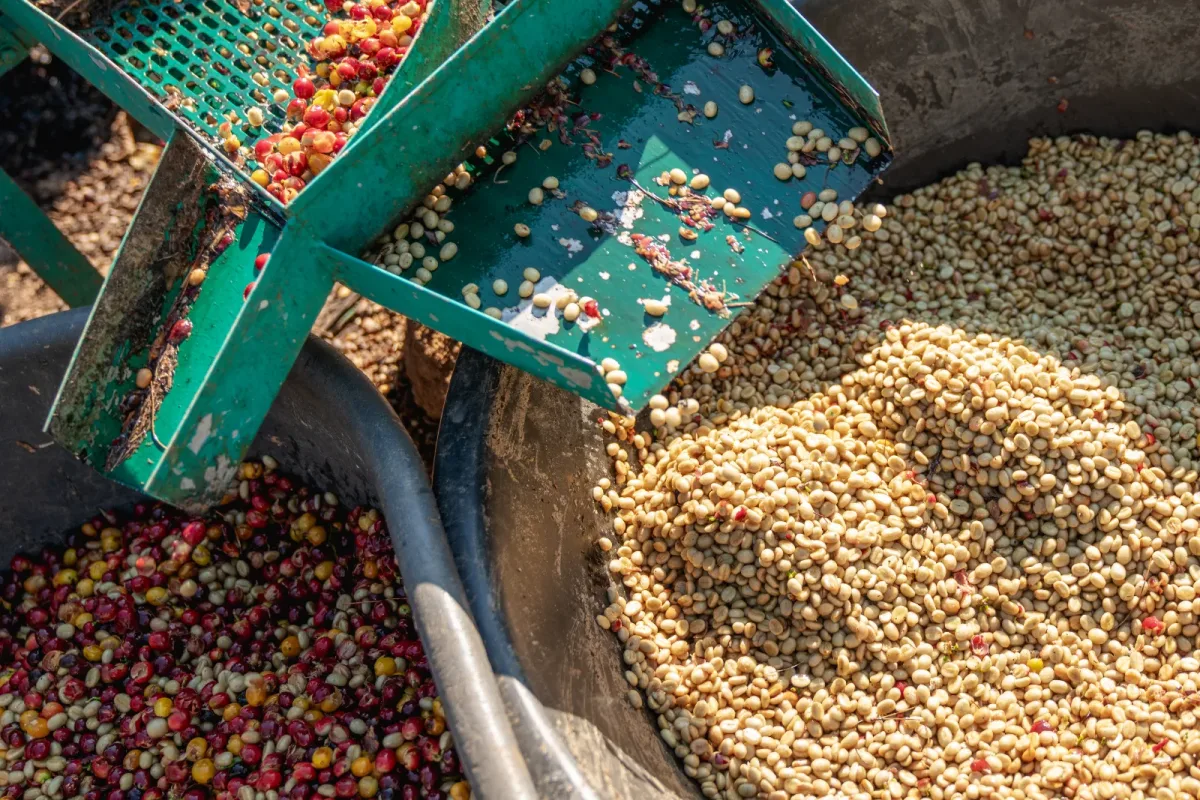
The key phrase for opening a café in 2026 is "roasting independence." The traditional model—buying beans from outside suppliers and reselling them—simply can't hold up anymore. Owners need to control their costs through in-house roasting, producing only as much as they need so inventory doesn't become a burden.
It isn't just about owning a roaster; the heart of it is securing data-driven "reproducibility." Lean on the instincts of one skilled roaster, and quality wavers the moment that person is replaced. Turn the roasting profile into data, and anyone can reproduce the same flavor.
The Customer Has Changed, Too
Trust is growing for cafés that can clearly explain "where this bean came from and how it was roasted," rather than leaning on interiors or abstract concepts. Cafés that open up their roasting process or explain the structure of a coffee's flavor reportedly see higher return-visit rates.
You can raise your brand value without expanding into a complicated menu or hiring more staff. Being able to accurately describe the characteristics of five kinds of beans has become a more powerful differentiator than a drink menu with 30 elaborate options.
The New Formula for Opening a Café
A representative from Stronghold put it this way: "A roaster isn't just a piece of equipment—it's a core operational tool that controls cost structure and quality at the same time." In other words, Korea's café market has moved past its era of unchecked expansion and entered a mature stage, one where efficiency and sustainability have to be weighed.
This is exactly why you need to take stock of your own temperament before opening a café. The work demands repeating monotonous roasting every day, meticulously logging data, and the attentiveness to catch even the smallest change. It calls for an entirely different skill set than the one you pictured back when you dreamed of running a romantic café.
What It Takes to Survive
The conditions for a café that will survive beyond 2026 are clear. You have to be able to control your bean costs in-house, maintain consistent quality with minimal staff, and deliver clear value to the customer.
Opening a café is now a matter of systems, not sentiment. Whether you can build a sustainable operating model even amid a rising cost structure is what separates success from failure. If you're dreaming of a café, start by asking yourself this: Are you ready to roast at the same time every day, record the data, and respond with sensitivity to even the slightest change?