
A developer spent two years building his own text editor. The very first line of his feature list reportedly read like this.
"I don't build features for any user but myself.
No settings screen.
Every preference goes straight into the code."
This happened in 2026 — an era when AI is supposed to handle all the coding for you.
The Secret of a Search That Nails It in Two Keystrokes
The file search he built was almost laughably simple. Three criteria were the whole of it: does the filename start with the query, does it contain the query, and was it edited recently? No fancy algorithms — just those three rules. And yet, type two characters and there's a 95% chance the file you want lands in the top two slots of the list.
Here's how he puts it.
"I've seen far too many search features ruined by trying to be too clever."
The Joy of the Struggle He Wouldn't Hand to AI
This developer rewrote his regular-expression engine four times. In an age when AI will write the code for you, why go to all that trouble? What he gained was more than fast search. He came to deeply understand the structure of UTF-8, terminal rendering, and how to distribute work across multiple threads. The finished tool fits his hand perfectly, and when it breaks, he's the one who fixes it.
The note he leaves at the end of his piece stays with you. "Build your own tools. It doesn't have to be a text editor. And please, resist the urge to hand the hard parts to AI. There is joy in the struggle."
A Philosophy of Homemade Tools in an Age of Off-the-Shelf Excess
Whenever he edited a system file or jotted down a note, he used his own editor — no matter how inconvenient. Whenever he spotted a missing feature or a bug, he logged it on the spot, no matter how trivial. Any problem annoying enough to grate on him, he fixed then and there. Once he adopted these rules, his workload grew from an hour a month to a few hours a week.
This is exactly where the advantage of building your own tools lies. You don't have to satisfy every user, so you keep only what "works for me." It's living proof that 80% of off-the-shelf features are unnecessary.
You could write this off as one quirky engineer's hobby — but the instinct of "there's no tool that fits, so I'll make one myself" doesn't belong to developers alone. It maps directly onto the core competency of the Work 3.0 era described in Augmented Human.
In an age when AI replaces skills and knowledge, what remains for humans is attitude. The attitude of refusing to settle for the off-the-shelf and building tools of your own; of not tolerating friction but fixing it at once; of insisting on understanding the hard parts yourself rather than offloading them to AI — that is what matters.
The Difference a Personal Touch Makes
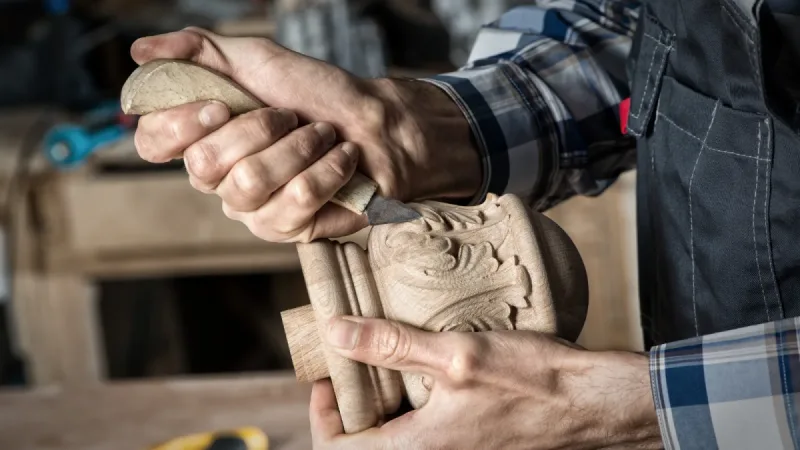
In an era overflowing with ready-made products, there's something special about the feel of a tool you've carved with your own hands. It's a question of attitude more than efficiency. That's precisely why this developer, after trying countless editors — Helix, VS Code, Sublime Text, Vim, Neovim — ended up building one of his own.
What he was after was fingerspitzengefühl. A German word meaning "the feeling in one's fingertips," it describes a perfect harmony between a tool and its user. The off-the-shelf editors were all excellent, but none of them gave him that subtle, intuitive feel.
Libretto sees this as "the tool philosophy of the augmented human." The more AI automates everything, the more it matters that humans can build and wield tools of their own. Only a tool shaped by your own intuition and experience — not by AI — can deliver true productivity and satisfaction.
Make something with your own hands today. It doesn't have to be a text editor. There is joy in the struggle, and perhaps, in the act of building, you can shape the very attitude you bring to your work.