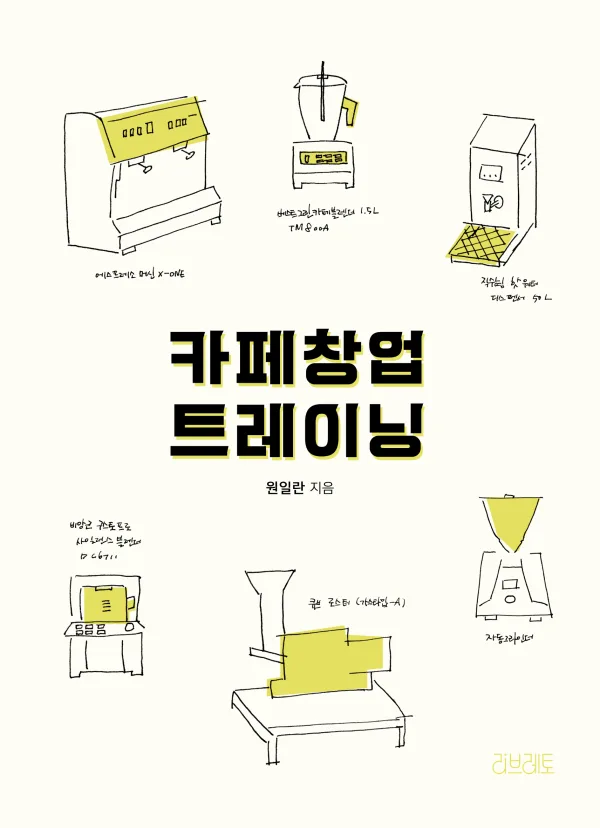
Many office workers dream of quitting their jobs to open a café. But once the doors actually open, it's common to see them running on gut feeling for cost calculations and pricing they never had to think about at their old jobs — and sliding into the red as a result. This article looks at where career-changer prep should actually begin, and specifically, what mindset and habits need to be in place before you hand in your resignation. Let's start with what matters more than savings or a business plan.
Why an Employee's Instincts Don't Work in a Café
As an employee, a fixed paycheck arrives every month, and you rarely have to line up what you spent against what you actually produced. Departments track budgets and performance, but few people ever calculate exactly how much a single cup of coffee costs — beans, milk, the cup, electricity, labor. The moment you start running a café, though, that calculation becomes the entire business. An owner who decides whether to sell an Americano for 3,500 won or 4,000 won by gut feeling, and an owner who works out the cost first, will be looking at two completely different profit-and-loss statements three months later. The first step in preparing for a career change isn't raising capital — it's accepting that this shift in mindset has to happen at all.
Turn Diligence Into a System, Not Willpower
Many aspiring entrepreneurs start preparing with a grim, all-or-nothing resolve: once I quit, I'll go all in. But willpower doesn't stay the same size every morning. What keeps you steady after a night of overtime, or on a day when you're simply not feeling well, isn't resolve — it's a procedure you built in advance. Habits like logging that day's sales and ingredient usage after closing, placing orders on a fixed day each week, and reconciling accounts at a set time: if you build these routines before you quit, they become the skeleton of the business the moment you open your doors. Without such procedures, reacting purely to each day's mood and circumstances, even the most strong-willed person will burn out and let the management slide within a few months. Diligence isn't an innate trait — it's closer to a structure you design ahead of time.
Build the Habit of Calculating Cost Per Unit
The first task in cost management is breaking down every expense that goes into a single menu item, unit by unit. The real cost only emerges once you add up the grams of coffee beans, milliliters of milk, pumps of syrup, supplies like cups, lids, and straws, and the labor cost corresponding to the time it takes to make that item. You can practice this before you quit. Just looking at the menu board of a franchise or neighborhood café you're interested in, estimating its rough cost structure on your own, and comparing it to the actual selling price builds up your intuition. At first it will just be guesswork, but repeat the habit and you'll develop an eye for which items carry a healthy margin and which ones are essentially a courtesy to customers.
From Cost to Price, From Price to Profit
Once the per-unit cost is clear, it naturally leads to pricing. Prices set without knowing the cost tend to drift — copying competitors or caving to customer pushback and dropping lower. Prices set with the cost in hand come with a floor: at minimum, you won't sell below this line. And the moment you decide how much to make above that floor, the profit structure finally comes into view.
These three steps can't be taken out of order. If you set a price before you know the cost, profit will swing unpredictably every month, and you won't even be able to pinpoint why.
What You Can Start Preparing Right Now
There's plenty you can do before you even set a resignation date: estimate the cost structure of menu items in the café segment you're interested in, build a daily logging routine and practice it in your everyday life, and work out the relationship between cost and price on your own. Once these three habits are second nature, you can sidestep much of the first crisis every new business owner faces — the bewildering feeling that nothing is left over even though you're selling. In the end, preparing for a career change as an employee isn't really about the time it takes to save money. It's the time it takes to become someone who calculates, and takes responsibility for, unit cost on their own.