

Over the past few years, coffee chains built around ultra-cheap 1,500-to-2,000-won (roughly $1.10 to $1.50) Americanos have been popping up across South Korea at a rapid pace, leaving both customers and would-be franchise owners wondering how a shop can cover rent and labor at those prices and still turn a profit. This piece breaks down the economics of 1,500-won coffee along two axes—revenue and cost—to explain exactly why margins survive such a low price per cup. For anyone running a shop or considering opening one, it also lays out which numbers to check first.
Breaking Revenue Down Into Price per Customer and Customer Count
Revenue ultimately comes down to a simple multiplication: price per customer times number of customers. A single shop's daily revenue is the average amount each customer spends, multiplied by how many customers walk through the door. Looking just at the sticker price on a cup of Americano, low-cost shops charge noticeably less per customer than a typical coffee chain. To make up that gap, foot traffic has to rise by the same margin or more just to hit the same revenue. That's exactly why budget coffee chains cluster multiple locations tightly within a small trade area and lean heavily on takeout and fast turnover. In effect, they trade a lower price per customer for higher customer counts and faster table turns to hit the same total revenue.
High Revenue Doesn't Always Mean High Profit
There's an important catch here: a shop with higher revenue doesn't necessarily keep more profit. Locations that generate high revenue usually sit in high-foot-traffic areas, where rent and other overhead tend to climb right along with sales. Fixating on revenue alone makes it easy to miss that cost structure, and jumping in without understanding the conditions behind those sales numbers raises the odds of failure considerably. The same logic applies to 1,500-won coffee shops. Even a shop that has successfully driven up revenue through fast turnover still needs to account for what it cost to generate that revenue before anyone can say how much actually ends up as profit.
The Three Costs That Determine Profit
Standing between revenue and profit are costs that absolutely have to be kept in check. How a business manages them determines whether it succeeds or fails.
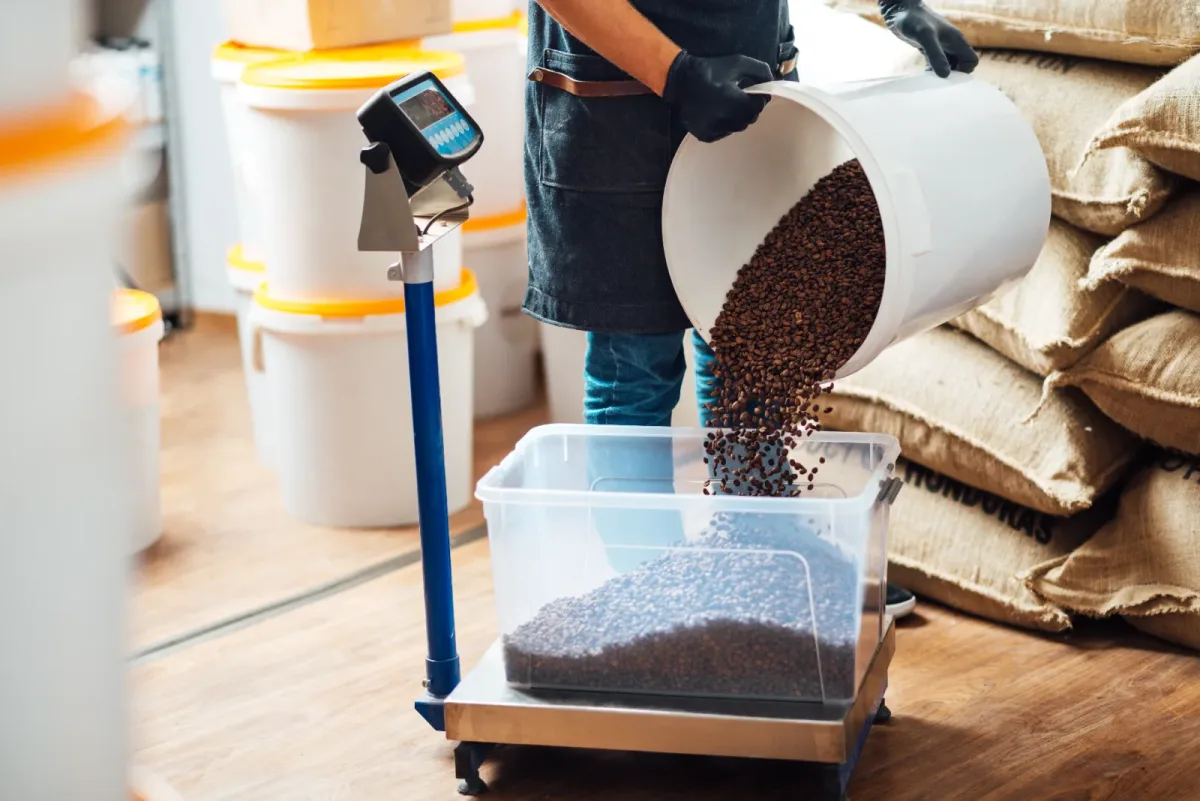
Each of these three costs has to be pushed down to keep a margin alive at such a low price per cup. Raw material costs are typically lowered by buying beans and other ingredients in bulk and keeping the menu simple. Rent is managed by skipping large storefronts in prime commercial districts in favor of small-footprint locations in lower-cost areas, spread across multiple sites. Labor costs are controlled by trimming the menu and simplifying prep work so fewer staff are needed to run a shop.
Why Opening a Shop Is Easy, But Making It Profitable Isn't
The investment required to open a shop is straightforward: secure a location, finish the interior, bring in equipment, and the doors open. Turning that into actual profit is not straightforward at all. Once a shop opens, profit only accumulates if the owner keeps managing daily customer counts, day-to-day raw material costs, and the rent and labor bills that come due every month. Making the 1,500-won coffee model work takes more than the decisions made at opening—it requires holding all three costs down and keeping customer counts up for as long as the shop stays in business.
To judge whether a budget coffee shop can actually turn a profit, it's worth checking four things: whether projected daily customer count times price per customer reaches the target revenue; whether rent is sustainable relative to that revenue; whether the operation is set up to keep labor costs down; and whether the shop has the scale or supplier terms to bring down raw material costs. If even one of these four is off, the low price tag ends up being little more than eye-catching marketing, and the shop's actual profit and loss tell a very different story. In the end, understanding the budget coffee market comes down not to the 1,500-won price itself, but to reading the combination of customer count and the three costs sitting behind it.