
In business, there comes a moment when you have to look at a single month's profit and loss and decide whether the business is fundamentally okay. At that moment, reading the surface of the numbers and tracing where the numbers came from produce two entirely different judgments. If you can't tell whether a negative line on the income statement reflects the health of the business or an expense that happened only this once, you can't make the right call.
In May 2026, Coupang announced its Q1 results. Revenue grew 8% year over year — and the company posted a net loss. The stock fell 2.56% on the day of the announcement. Digest those three numbers in one second and you're left with a single impression: a company that's growing but losing money.
Look into the background of that loss, however, and the reading changes. As compensation for the large-scale customer data breach of 2025, Coupang decided to give its paid WOW membership customers vouchers worth roughly $1.2 billion (about 1.4 trillion Korean won). That cost is accumulating on its results across 2025 and 2026. It is damage control after an incident — and it is also spending to buy back customer trust. Which lens you choose determines what management conclusion you draw from the same number.
A $1.2 Billion Apology and an 80% Return Rate
Coupang's management designed a voucher program totaling roughly $1.2 billion for affected customers and decided to spread the cost across 2025 and 2026. According to reporting from The Motley Fool, equity analysts have characterized Coupang as a "turnaround stock."
The Q1 2026 results absorbed this cost in full. Despite the revenue growth, the company posted a net loss, and the market reacted to the surface number. The stock drop was that reaction.
The same quarter reported two other numbers. Eighty percent of the paid WOW members who left right after the data breach have returned, and the company's newer business lines — including Coupang Eats, Taiwan, and Rocket Now in Japan — grew 25% year over year. Neither number made it into the one-line stock headlines.
Put the three numbers together and the context shifts. Coupang is a company that has embedded itself deep in the daily lives of Korean consumers through Rocket Delivery, its signature rapid-delivery service, and fresh groceries. The result of choosing a public compensation worth more than a trillion won showed up as an 80% return rate. The side that spent the money won its customers back — a simple but verifiable fact.
Two Signals Working Behind the Surface Loss
People who analyze corporate finances separately calculate underlying operating results excluding one-time costs to assess a company's stamina. The same applies to Coupang. Its Q1 gross margin was 28.81%, within the 25–35% range typical of e-commerce. Once the voucher cost drag clears, that margin will flow through to the income statement intact. That is the basis for reading the surface loss as something other than structural margin deterioration.
The first signal is whether the core asset is holding. WOW membership is the foundation of Coupang's Korean business. That 80% of members decided to pay again even after the incident means the value of the service itself outweighed the shock of the breach. As long as that signal stays alive, the core business's stamina can be considered undamaged at this point.
The second signal is whether new revenue sources are growing. Just as the Korean e-commerce market enters maturity, Taiwan and Japan delivered 25% growth. While the main business was cleaning up a crisis, the other wheel kept turning. A company that has secured a second growth axis, rather than depending on a single revenue source, weathers a shock to its core differently.
That said, it would be a mistake to read these two signals purely as grounds for optimism. The specific timeline for the Taiwan and Japan businesses to turn profitable is hard to confirm from public information. The possibility of further regulatory scrutiny remains. Management has indicated the voucher costs will end within 2026, but whether that promise holds can only be confirmed when Q2 and Q3 results arrive. Reading the signals without over-trusting them — and paying even closer attention to what the disclosures leave unsaid — is the basic posture of analysis.
Three Things a Solo Business Owner Can Apply Tomorrow
But if this story reads only as stock analysis, it's half the news. For anyone who has run a business for five years or more, the more practical question is this:
"Am I separating one-time costs from recurring costs in my own P&L?"
Run a business long enough and you'll hit months like these: two key clients ended their contracts in the same month, a fulfillment error triggered a wave of refunds, a big campaign budget produced nothing. Looking at that month's numbers alone and wondering whether to change the direction of the business is a judgment made from the wrong baseline. First determine whether it's a one-off or a recurring pattern.
The first thing you can do tomorrow is add a "cost type" column to your monthly P&L review. Mark each line item as recurring or one-time, and calculate a separate figure that excludes the one-time items. This makes it far clearer which direction your underlying operating profit is actually moving. Simply having fewer judgments shaken by short-term shocks changes the quality of how you run the business.
The second is tracking your customer win-back rate as a number. Coupang disclosed that 80% of WOW members returned after the breach. Of the customers who left you over the past year because of service problems or fulfillment errors, what percentage bought again? If you don't track that number, you have no way to judge whether your efforts to rebuild trust are working. Start right now: pull up the list of customers who churned in the past six months and check whether you re-contacted them and whether they purchased again.
The third is auditing how diversified your revenue channels are. While Coupang's Korean business absorbed the voucher costs, its Taiwan and Japan operations grew 25% and carried overall revenue. Check whether you have, right now, a second channel that could carry 20% or more of total revenue if your main one temporarily faltered. Laying out revenue share by channel in hard numbers is the most concrete first step you can take today.
Reading Behind the Numbers Changes the Decision
More durable than the fact that Coupang spent 1.4 trillion won is the ability to read what that spending was aiming at. The eye that looks at the same income statement and distinguishes "the business is collapsing" from "the business is absorbing a one-time shock" works exactly the same way in your own monthly P&L review. The habit of tracing the background that produced a number, rather than its surface, changes the quality of your management judgment.
Behind every number is a decision, and behind every decision is an intent. Only when you read that intent do financial figures start working as a management tool.
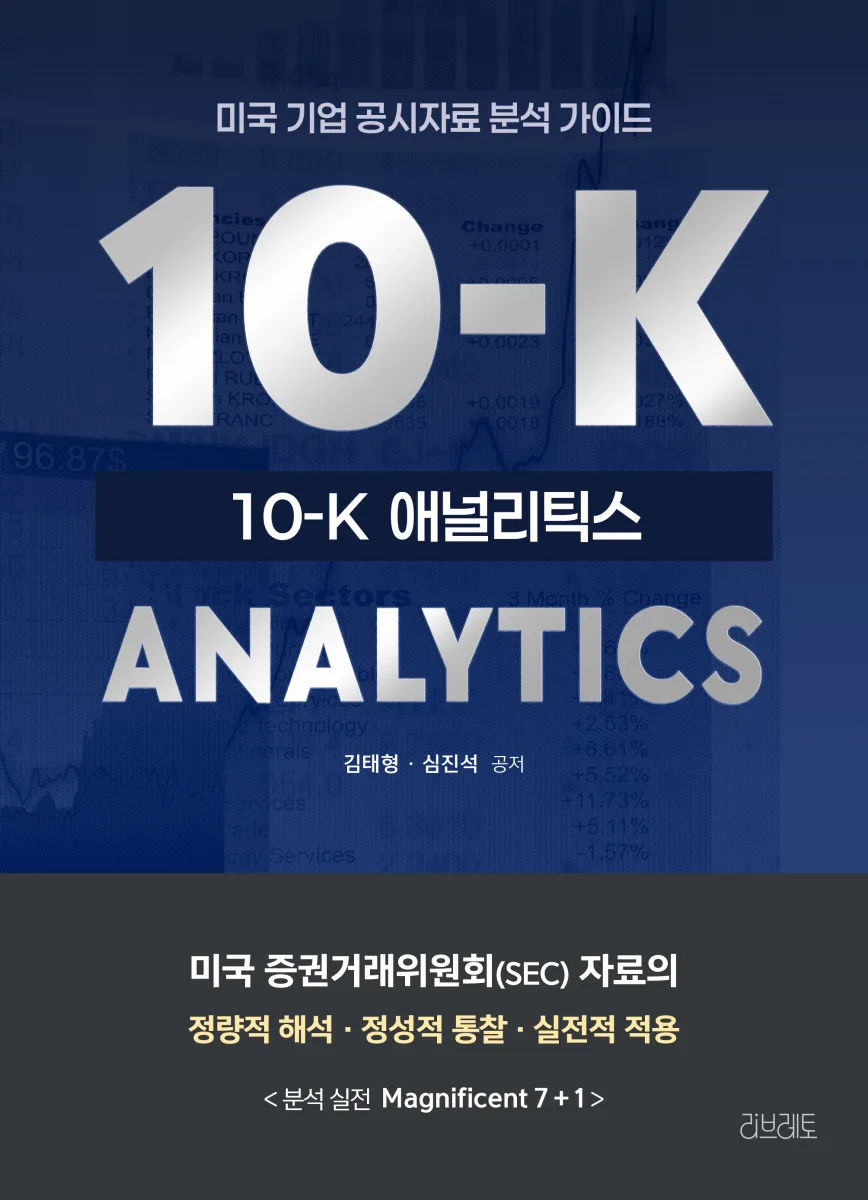
If you want to train systematically in reading what companies emphasize — and what they bury — in their official filings, 10-K Analytics by Kim Tae-hyung and Shim Jin-seok, a Korean-language guide written for investors, is one place to start. Its analytical frame — decoding the language of executives and tracing the story behind the numbers — reads just as well for anyone who wants to examine their own business through an operator's eyes.