
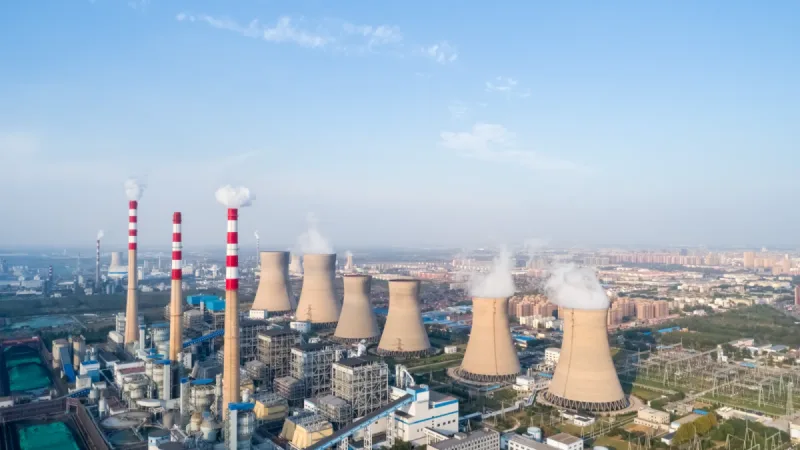

An Explosion of Tools, a Reality Check on Infrastructure
AI tools are exploding. But where do they actually run?
Yet another creative AI agent launched this week. One claims to help with everything from planning to execution. And these are just a fraction of the tools released this week alone. For coding, there's Claude Code, Cursor, Codex, and gstack. For design, Midjourney and Figma AI. For video, Runway, Pika, and Sora. For automation, n8n, Zapier, and Make. For agent frameworks, LangChain, AutoGen, and CrewAI.
New tools pour out every week. Tools for tools appear, then tools for the tools' tools. The AI tool universe seems to be expanding without end.
Yet at the center of this abundance, the actual foundation every one of those tools depends on is in crisis. Data centers, GPUs, electricity. If that infrastructure falters, every tool built on top of it stops working. And right now, that infrastructure is faltering.
A Chip Shortage in 2024, a Power Shortage in 2026
One sentence from GPUnex, a US GPU cloud company, written in February 2026, captures the heart of the shift: "In 2024, the main constraint on AI compute was chip supply. Nvidia couldn't make H100s fast enough. By 2026, the constraint has moved to electricity. The GPUs exist. There's no power to run them." [Twitter](https://twitter.com/maekyungsns)
The bottleneck has moved. A year ago, businesses stalled because they couldn't get their hands on Nvidia GPUs. Now they stall because the data centers those GPUs would plug into don't have enough electricity.
Numbers Bloomberg reported in April show the scale of the shock. Of the 12 to 16 gigawatts of data center capacity slated to come online in the United States in 2026, only 5GW has actually broken ground. Nearly half of the projects are stalled or delayed.
Even OpenAI's much-touted $500 billion (about ₩742 trillion) Stargate project has ground to a halt, owing to power and infrastructure problems on the ground in Texas. The megaproject Sam Altman championed in meetings with South Korea's president and Japan's prime minister has, in the end, been stopped in its tracks by electricity.
Data Centers Filled to 95 Percent
US data center utilization has reached a tipping point. By the end of 2026, occupancy in major US markets is expected to exceed 95 percent. That doesn't mean the servers are full — it means the power capacity is fully spoken for. New customers can't deploy GPU racks because the facilities have no power allocation left.
The situation is even worse in Northern Virginia, the world's largest data center market, where utility connection wait times for new large-scale deployments now exceed three to five years.
Three to five years. In an era when new AI tools ship every week, it takes three years just to connect electricity to the data centers those tools would run in.
The gap creates a strange landscape. On one side, new AI tools are announced daily. On the other, the physical foundation to run them is in short supply. An abundance of tools and a poverty of infrastructure are unfolding at the same time.
When Tools Explode, So Does Inference Load
This may sound like a distant problem — something for OpenAI or Meta to worry about. But strip it down, and every AI tool ultimately runs on the same foundation.
Whether it's Luma AI, Claude, or Midjourney, every AI tool comes down to one of two things: renting someone else's GPUs (an API), or buying and running its own. As a tool's users grow, inference load grows; as inference load grows, so does demand for GPUs and power.
The Uptime Institute's 2026 outlook pins down this structure precisely: "The concentration of AI compute infrastructure in a handful of providers will keep intensifying over the next several years. By the end of 2026, roughly 10 gigawatts (GW) of new IT load will be added to data centers worldwide to run generative AI and adjacent workloads — meaning roughly 13 to 15 million GPUs and accelerators deployed globally." [Mk-corp](http://mk-corp.co.kr/)
The more companies use AI tools, the more the infrastructure those tools depend on concentrates in the hands of a few giant operators. When that infrastructure runs short, tool prices rise, response times slow, and eventually the tools become unusable.
The New Bottleneck of the Inference Era
Until now, the AI infrastructure conversation has centered on training — the enormous computing resources needed to build large models like GPT-5 or Claude Opus. But the center of gravity is shifting.
"AI inference workloads are expected to overtake training by 2027."
Training happens once. Inference never stops. Every time a user asks an AI a question, every time an agent calls a tool, every time an image is generated, inference runs. The more tools there are and the more users they attract, the more inference load grows — exponentially.
Inference infrastructure also behaves differently from training infrastructure. "In an AI agent's multi-step workload, tasks are automatically routed to the chips suited to each stage — initial inference (compute-intensive), decoding (memory-intensive), tool calls (network-intensive) — boosting inference speed three to ten times at the same cost and power."
Each step of an agent's work demands a different kind of resource. Each inference stage calls for different GPUs, memory, and network bandwidth. Running even a single agent tool touches the entire infrastructure stack.
What This Means for Tool Users
What does this shift mean for those of us who use AI tools? There are three practical implications.
First, AI tool prices track infrastructure prices. Today a Claude API call costs a few cents and a ChatGPT subscription runs $20 a month. Don't assume those prices will hold forever. If data center power costs rise and GPU supply tightens, those costs eventually get passed on to users. Electricity costs across US regions vary fourfold — from $0.04 to $0.16 per kilowatt-hour — making location the single biggest variable cost in running GPUs. [Twitter](https://twitter.com/maekyungsns)
Second, more users can mean slower responses. You've probably watched a popular AI service get gradually slower. That isn't just a traffic problem — it's the limits of the GPUs and data centers the service depends on. With new data centers taking three to five years to come online, infrastructure simply can't grow as fast as demand in the short term.
Third, some AI tools may disappear or go closed. Many of the tools launching every week have no infrastructure of their own and depend on Big Tech APIs. If API prices rise or policies change, their entire business model wobbles. For users, that means a favorite tool could double its price or shut down overnight.
The Real Differentiator Is Control of Infrastructure
So who survives in this structure? Companies that own their infrastructure. Nvidia is pushing vertical integration well beyond GPUs — into scale-up networking (NVSwitch), scale-out Ethernet (Spectrum-X), and platform security (MGX).
OpenAI is trying to build its own data centers through Stargate. Microsoft, Google, and Amazon have each signed nuclear power deals. "Microsoft, Google, and Amazon have all signed nuclear power agreements to supply their AI data centers."
The reason they're reaching all the way to nuclear plants is simple: the future of AI tools will ultimately be decided by electricity.
Seen this way, the analysis that "the new battleground is who can supply stable, cheap power, and for how long" comes into sharp focus. Data centers are no longer mere IT facilities — they're being recognized as forward bases in the contest for power and energy supremacy.
Where Korea Stands
Where does South Korea sit in this game? The country's private data center market is projected to grow from about ₩6.22 trillion (roughly $4.5 billion) in 2024 to about ₩10.19 trillion (roughly $7.4 billion) in 2028. The problem is the capacity to absorb that growth. With power demand concentrated around Seoul, structural constraints persist: social conflict over expanding the transmission grid, and limits on where new power generation can be sited.
Whether Korean companies run their own AI or import foreign AI tools, data center infrastructure has to sit underneath it all. If that infrastructure falls short, using AI in Korea gets more expensive and responses get slower — and Korea falls a step behind in the global AI race.
Conclusion: Infrastructure Will Decide AI's Future
Back to the opening question. We live in an era when AI tools pour out endlessly. So where do they run?
The answer is clear. On GPUs in data centers. On the electricity that powers those GPUs. In the plants that generate that electricity. Through the transmission lines that carry it there.
The real competition around AI isn't about building new tools. It's about controlling the infrastructure those tools run on. A new tool ships every week; a new data center takes three years. A new power plant takes six. Two games on utterly different clocks are playing out on the same stage.
This isn't to say that skill with the tools doesn't matter. But it's worth knowing that a tool's reliability, price, and future depend less on the tool itself than on the infrastructure beneath it. Cheer for each week's new releases — but watch how the infrastructure they all depend on is changing, too.
The answer to the question of what the most important resource of the AI era is keeps getting clearer. Not models, not tools, not data. Electricity — and the data centers that can turn that electricity into running GPUs. Beneath the era of tools, the real game is entering the era of infrastructure.


