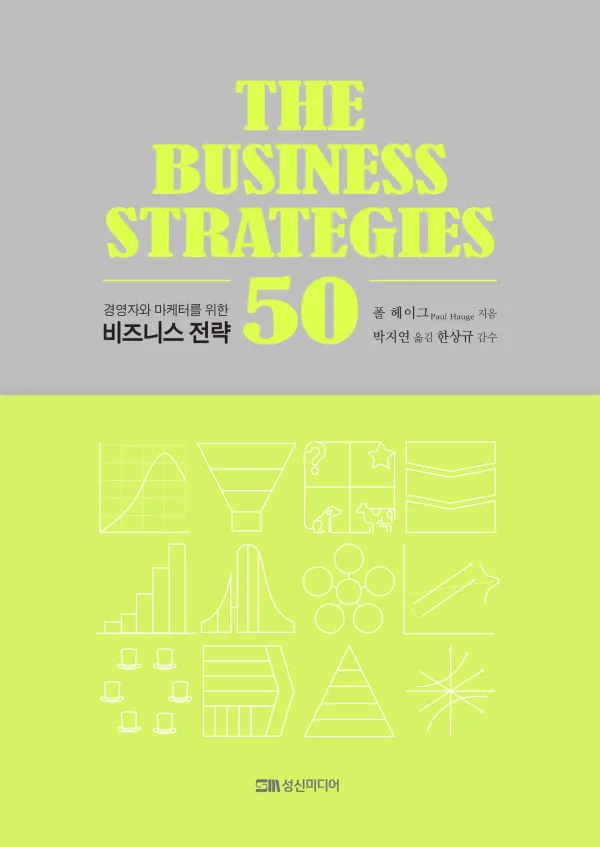
The Structure of the Book
Foreword: 50 Business Strategies You Can Apply in Practice
Introduction: An Overview of Business and Marketing Models
01. The 4Ps Model
How to design the marketing mix
02. The ADL Matrix
Strengthening the product portfolio or strategic business units
03. AIDA
A business model for effective marketing communication
04. The Ansoff Matrix
How to grow a company
05. Benchmarking
Setting targets for business and marketing KPIs
06. Blue Ocean Strategy
Driving innovation and new product development
07. The Boston Consulting Group Matrix
Planning the product portfolio and various strategic business units
08. Brand Audit
Strengthening brand competitiveness
09. Competitive Intelligence
Analyzing the market's strengths and weaknesses
10. Conjoint Analysis
Evaluating optimal pricing and the value of individual attributes
11. The Customer Journey Map
Measuring the current performance of marketing and sales processes
12. Customer Lifetime Value
Estimating a customer's spending with a given company over their lifecycle
13. The Customer Value Proposition
Generating a powerful motivation to buy
14. The Diffusion of Innovation
Launching new products and services
15. The Directional Policy Matrix
Prioritizing segments or new ideas
16. The Disruptive Innovation Model
Winning the competition through creative methods
17. Edward de Bono's Six Thinking Hats
Brainstorming problems and generating new ideas
18. The EFQM Excellence Model
Improving organizational quality and performance
19. The Four Factor Model
Analyzing competitors' strategies
20. Gap Analysis
Improving a company's weaknesses
21. Greiner's Growth Phases Model
Understanding a company's various growth phases
22. The Kano Model
Identifying buying motivations
23. Kotler's Five Product Levels
Adding value to a product/service
24. Market Sizing
Evaluating the size and value of the available/potential market
25. Maslow's Hierarchy of Needs
Differentiating market positioning
26. McKinsey's 7S Model
A tool for performing a company 'health check'
27. Mintzberg's 5Ps of Strategy
Devising competitive strategy
28. MOSAIC
Setting targets for current and potential opportunities and how to achieve them
29. Net Promoter Score
A means of improving customer satisfaction
30. New Product Pricing
Setting the price of a new product
31. Personas
Improving the targeting effectiveness of marketing messages
32. PEST
Evaluating the key macro factors that determine a company's future
33. Porter's Five Forces
Evaluating the five economic forces related to the intensity of competition
34. Porter's Generic Strategies
Pinpointing the strongest competitive position
35. Price Elasticity
Identifying opportunities to raise or lower prices
36. The Price-Quality Strategy
Guiding a company's pricing strategy
37. The Product Life Cycle
Setting long-term product strategy
38. The Product-Service Positioning Matrix
Positioning products by quality and service value
39. Segmentation
Gaining comparative advantage through customer groups
40. The Service Profit Chain
Linking employee satisfaction and performance with company profit
41. SERVQUAL
Aligning customer expectations with company performance
42. SIMALTO
Identifying the value customers place on improvements to a product or service
43. Stage-Gate New Product Development
Planning the development and launch of new products and services
44. SWOT Analysis
Analyzing growth opportunities at the product, team, or business level
45. System 1 and System 2 Thinking
Identifying the emotional factors that influence decision-making
46. USP
Pinpointing the unique strengths of a product/service
47. Value-Based Marketing
Improving profitability by adding value to products and services
48. The Value Chain
Identifying the value of a product or service across the manufacturing process
49. The Value Equivalence Line
Managing price and product benefits within business strategy
50. The Value Net
How to gain benefits through cooperation with competitors
References
Index