



In the Age of AI, the Standards for Judging Human Competency Have Changed
For a long time, the three elements used to judge and cultivate human competency were Skill, Knowledge, and Attitude. A person who possessed all three in balance was called a "talent," industry wanted such people, and education set out to cultivate them. But now, as a vague anxiety spreads that AI will replace humans, the question "What jobs are actually left for humans?" runs rampant. To answer this question, we must first understand how "Work" has changed over time.
There was an era when people worked with their bodies and produced data. This was Work 1.0, the age of Skill, when skilled Labor itself was competency. Then, as machines replaced physical labor, the ability to extract information from data became central. This was Work 2.0, the age of Knowledge, when the "knowledge worker" emerged. The education of each era followed this current. In Work 1.0, skills were passed down through apprenticeship-style training; in Work 2.0, schools and companies devoted themselves to teaching knowledge. But this time, it is not machines but AI that has emerged. AI performs not only skill but also knowledge faster and more accurately than humans. Two of the three axes of competency are being replaced. This is Work 3.0, the age of Attitude.
The difference between recognizing this shift and failing to recognize it is enormous. Without the frame of Work 3.0, one still believes that honing skills and accumulating knowledge is competitiveness. Education repeats the methods of Work 1.0 and 2.0, and working people end up in a speed race against AI in the very areas where AI excels. The outcome of that race is predetermined: the work humans can do disappears and is replaced by AI and robots.
Even so, this is no reason to fear or reject AI. When machines appeared, humans did not vanish either. Freed from physical labor, humans upgraded themselves into knowledge workers. The same holds true now. To the extent that AI takes over skill and knowledge, humans must expand themselves into areas AI cannot handle. But to do so, we must first know precisely what AI does well and what it does not.
AI is like the magic mirror in the fairy tale 『Snow White』. The stepmother asked, "Who is the fairest of them all?" and the mirror answered. But the mirror had never once pondered for itself what "fair" means. It merely produced an answer based on the biases of past data. The bigger problem is that, even for questions with no right answer, the mirror gave an answer—whether right or wrong. The stepmother, failing to get the answer she wanted, shattered the mirror, and the relationship surrounding the magic mirror spiraled into catastrophe. In the age of AI, the truly dangerous thing is not AI's capability but ourselves, who pose the wrong questions to AI. What determines the right question is human attitude.
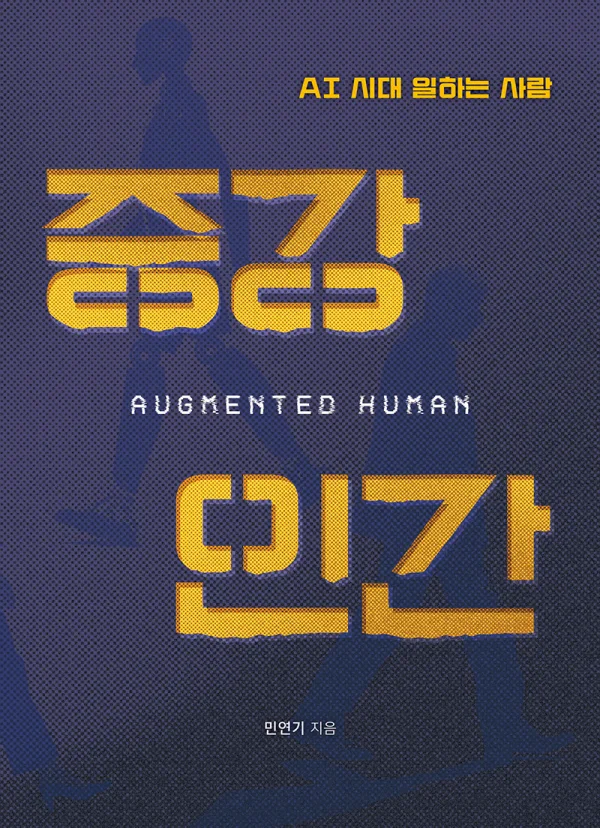
This book is structured as a three-stage journey toward acquiring that attitude. Part 1, "The End of Work," confronts the reality of Work 3.0: disappearing jobs, physical AI, jobless growth. The starting point is to look squarely—without turning away—at an era in which labor vanishes and "Delegating" becomes routine. Part 2, "How AI Works," grasps the operating principles and limits of AI: AI trapped in data, AI bound by paradigm, AI obsessed with finding answers. Only by understanding the structural reasons why the magic mirror cannot help but give answers even to questions that have none can we see the boundary between what to entrust to AI and what humans must judge. Part 3, "Augmented Human," addresses how humans grow beyond that boundary—from getting past the trap of the Dunning-Kruger effect all the way to the "Augmented Human's RAG," which expands thinking through Zettelkasten and the Second Brain. The order is to confront, to understand, and to grow.
In the age of Work 3.0, what we need is the attitude to judge value, the attitude to learn ceaselessly, and the attitude to connect and expand. Are you now ready to become an augmented human?